Quotessence
Home / Quotes / Quote by Reynolds Price

Quote by Reynolds Price

Author

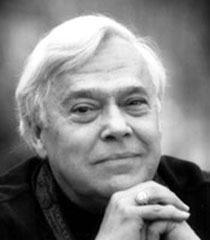
Reynolds Price
Reynolds Price

Reynolds Price, born on February 1, 1933, and died on January 20, 2011, was a renowned American poet. His poetry, known for its unique style and profound emotional expression, has won the hearts of readers. Price's works cover a wide range of themes, including love, nature, history, and religion. His poetry has won numerous literary awards and has had a significant impact on contemporary American poetry. more

You May Also Like

“A need to tell and hear stories is essential to the species Homo sapiens-second in necessity apparently after nourishment and before love and shelter. Millions survive without love or home, almost none in silence; the opposite of silence leads quickly to narrative, and the sound of story is the dominant sound of our lives, from the small accounts of our day's events to the vast incommunicable constructs of psychopaths.”

“I've been covering the art industry for nine years, and I still don't feel like I have a clear grasp on what an art consultant does. What's the difference between a dealer and an art consultant? Who are they? What's their day to day like? So I asked a few private dealers, consultants and curators to talk about what they do. Everyone told me a different story.”

“The issue is Kinkade's ideology, and particularly his nostalgia; his paintings endlessly trumpet a nonexistent past when times were simpler and morality more pure. There's nothing wrong with this, but it stands at odds with a contemporary art world that looks to the future for inspiration. We value complexity and innovation, and distrust saccharine pictures of the past.”

“As my friend Jeremy Gilbert-Rolfe has argued persuasively, there is an element of positivity in the visible world, and in color particularly, that totally eludes the historicity of language, with its protocols of absence and polarity. The color red, as an attribute of the world, is always there. It is something other than the absence of yellow and blue--and, thus, when that red becomes less red, it becomes more one or the other. It never exists in a linguistic condition of degradation or excess that must necessarily derive from our expectations.”