Quotessence
Home / Quotes / Quote by Fritjof Capra

Quote by Fritjof Capra

“When carbon (C), Oxygen (o) and hydrogen (H) atoms bond in a certain way to form sugar, the resulting compound has a sweet taste. The sweetness resides neither in the C, nor in the O, nor in the H; it resides in the pattern that emerges from their interaction. It is an emergent property. Moreover, strictly speaking, is not a property of the chemical bonds. It is a sensory experience that arises when the sugar molecules interact with the chemistry of our taste buds, which in turns causes a set of neurons to fire in a certain way. The experience of sweetness emerges from that neural activity.”

Quote by Fritjof Capra

Work

Theatre for Living: The Art and Science of Community-based Dialogue

This book delves into the principles and techniques of Theatre for Living, a method that utilizes dialogue as a means of fostering community understanding and social change. It examines the art and science behind community-based dialogue in performance, offering insights into the process and impact of such theatre practices. more

Author
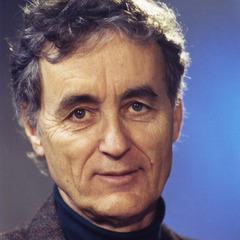
Fritjof Capra
Fritjof Capra

Fritjof Capra (born February 1, 1939) is an Austrian-born American physicist, systems theorist, and ecological thinker. He is best known for his 1975 book 'The Tao of Physics', which explores parallels between modern physics and Eastern mysticism. Capra advocates for deep ecology and systems thinking, integrating science, society, and ecology. His works, including 'The Turning Point' and 'The Web of Life', have influenced global environmental movements and interdisciplinary studies. He co-founded the Center for Ecoliteracy in Berkeley, California, promoting sustainable education. Capra's ideas have sparked both acclaim and criticism, but he remains a key figure in paradigm shift discourse. more

You May Also Like

“When chemists have brought their knowledge out of their special laboratories into the laboratory of the world, where chemical combinations are and have been through all time going on in such vast proportions,-when physicists study the laws of moisture, of clouds and storms, in past periods as well as in the present,-when, in short, geologists and zoologists are chemists and physicists, and vice versa,-then we shall learn more of the changes the world has undergone than is possible now that they are separately studied.”

“When one studies strongly radioactive substances special precautions must be taken if one wishes to be able to take delicate measurements. The various objects used in a chemical laboratory and those used in a chemical laboratory, and those which serve for experiments in physics, become radioactive in a short time and act upon photographic plates through black paper. Dust, the air of the room, and one's clothes all become radioactive.”

“Whenever Nature's bounty is in danger of exhaustion, the chemist has sought for a substitute. The conquest of disease has made great progress as a result of your efforts. Wherever we look, the work of the chemist has raised the level of our civilization and has increased the productive capacity of the nation. Waste materials, formerly cast aside, are now being utilized.”

“Who would not have been laughed at if he had said in 1800 that metals could be extracted from their ores by electricity or that portraits could be drawn by chemistry.”

“You have heard of the new chemical nomenclature endeavored to be introduced by Lavoisier, Fourcroy, &c. Other chemists of this country, of equal note, reject it, and prove in my opinion that it is premature, insufficient and false. These latter are joined by the British chemists; and upon the whole, I think the new nomenclature will be rejected, after doing more harm than good. There are some good publications in it, which must be translated into the ordinary chemical language before they will be useful.”

“Your remarks upon chemical notation with the variety of systems which have arisen, &c., &c., had almost stirred me up to regret publicly that such hindrances to the progress of science should exist. I cannot help thinking it a most unfortunate thing that men who as experimentalists & philosophers are the most fitted to advance the general cause of science & knowledge should by promulgation of their own theoretical views under the form of nomenclature, notation, or scale, actually retard its progress.”

“Now when you cut a forest, an ancient forest in particular, you are not just removing a lot of big trees and a few birds fluttering around in the canopy. You are drastically imperiling a vast array of species within a few square miles of you. The number of these species may go to tens of thousands. Many of them are still unknown to science, and science has not yet discovered the key role undoubtedly played in the maintenance of that ecosystem, as in the case of fungi, microorganisms, and many of the insects.”