Quotessence
Home / Quotes / Quote by Calvin Coolidge

Quote by Calvin Coolidge

“Whenever Nature's bounty is in danger of exhaustion, the chemist has sought for a substitute. The conquest of disease has made great progress as a result of your efforts. Wherever we look, the work of the chemist has raised the level of our civilization and has increased the productive capacity of the nation. Waste materials, formerly cast aside, are now being utilized.”

Quote by Calvin Coolidge

Author
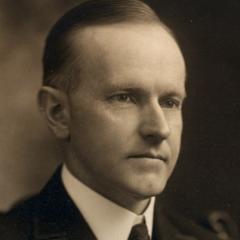
Calvin Coolidge
Calvin Coolidge

Calvin Coolidge was the 30th President of the United States, serving from 1923 to 1929. Known for his minimalist approach to governance and conservative economic policies, his presidency coincided with the 'Roaring Twenties' era of economic prosperity in the United States. more

You May Also Like

“Who would not have been laughed at if he had said in 1800 that metals could be extracted from their ores by electricity or that portraits could be drawn by chemistry.”

“You have heard of the new chemical nomenclature endeavored to be introduced by Lavoisier, Fourcroy, &c. Other chemists of this country, of equal note, reject it, and prove in my opinion that it is premature, insufficient and false. These latter are joined by the British chemists; and upon the whole, I think the new nomenclature will be rejected, after doing more harm than good. There are some good publications in it, which must be translated into the ordinary chemical language before they will be useful.”

“Your remarks upon chemical notation with the variety of systems which have arisen, &c., &c., had almost stirred me up to regret publicly that such hindrances to the progress of science should exist. I cannot help thinking it a most unfortunate thing that men who as experimentalists & philosophers are the most fitted to advance the general cause of science & knowledge should by promulgation of their own theoretical views under the form of nomenclature, notation, or scale, actually retard its progress.”

“Now when you cut a forest, an ancient forest in particular, you are not just removing a lot of big trees and a few birds fluttering around in the canopy. You are drastically imperiling a vast array of species within a few square miles of you. The number of these species may go to tens of thousands. Many of them are still unknown to science, and science has not yet discovered the key role undoubtedly played in the maintenance of that ecosystem, as in the case of fungi, microorganisms, and many of the insects.”

“Problems in human engineering will receive during the coming years the same genius and attention which the nineteenth century gave to the more material forms of engineering. We have laid good foundations for industrial prosperity, now we want to assure the happiness and growth of the workers through vocational education, vocational guidance, and wisely managed employment departments. A great field for industrial experimentation and statemanship is opening up.”