Quotessence
Home / Quotes / Quote by Hilaire Belloc

Quote by Hilaire Belloc

“The society of Christendom and especially of Western Christendom up to the explosion, which we call the Reformation, had been a society of owners: a Proprietarial Society. It was one in which there remained strong bonds between one class and another, and in which there was a hierarchy of superior and inferior, but not, in the main, a distinction between a restricted body of possessors and a main body of destitute at the mercy of the possessors, such as our society has become.”

Quote by Hilaire Belloc

Work

The Crisis Of Civilization

This book delves into the multifaceted issues threatening the stability and sustainability of contemporary civilization, including environmental degradation, economic instability, and political conflicts. It examines historical precedents and contemporary scenarios to analyze the potential pathways to collapse and offers insights into potential solutions and ways to avert such crises. more

Author
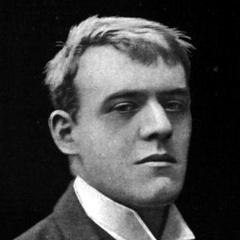
Hilaire Belloc
Hilaire Belloc

Hilaire Belloc was an English writer, poet, and historian, born on July 27, 1870, and died on July 16, 1953. He is recognized for his contributions to poetry, fiction, and political commentary. more

You May Also Like

“The worship of the nation has been able to make men tolerate under its authority what they could never have tolerated from princes: a submission to rule, which, through sumptuary laws on food and drink, through conscription, through a cast-iron system of compulsory instruction for all on State ordered lines, and through a State examination at the gate of every profession, has almost killed the citizen's power to react upon that which controls him, and has almost destroyed that variety which is the mark of life.”

“To control the production of wealth is to control human life itself. To refuse man the opportunity for the production of wealth is to refuse him the opportunity for life; and, in general, the way in which the production of wealth is by law permitted is the only way in which the citizens can legally exist.”

“Under the old social philosophy which had governed the Middle Ages, temporal, and therefore all economic, activities were referred to an eternal standard. The production of wealth, it distribution and exchange were regulated with a view to securing the Christian life of Christian men. In two points especially was this felt: First in securing the independence of the family, which can only be done by the wide distribution of property, in others words the prevention of the growth of a proletariat; secondly, in the close connection between wealth and public function.”

“When the mass of families in a State are without property, then those who were once citizens become virtually slaves. The more the State steps in to enforce conditions of security and sufficiency; the more it regulates wages, provides compulsory insurance, doctoring, education, and in general takes over the lives of the wage-earners, for the benefit of the companies and men employing the wage-earners, the more is this condition of semi-slavery accentuated.”

“When the mass of men are dispossessed - own nothing - they become wholly dependent upon the owners; and when those owners are in active competition to lower the cost of production the mass of men whom they exploit not only lack the power to order their own lives, but suffer from want and insecurity as well.”

“Wherever the Industrial system has reached its second generation it is threatened by two mortal perils. The first is the demand by an organized proletariat for sustenance without relation to the product of its labor; a demand which threatens the very existence of PROFIT (on the necessary presumption of which Capitalism reposes). The second, and immediately graver danger is that of a revolt for the confiscation of the means of production.”

“The terror in which English capitalists now stand of organized proletarian resistance gives to the naturally protected craft organizations the power to receive the wages they demand. They act as they have been trained to act by capitalist society, which denies the doctrine of the Just Price, which proclaims work to be an evil and the goal of human endeavor to be the avoidance of it; which puts it up as an ideal that individuals should get as much money as they possibly can out of their fellows by any means in their power.”