Quotessence
Home / Quotes / Quote by John Dominic Crossan

Quote by John Dominic Crossan

Work

The Historical Jesus: The Life of a Mediterranean Jewish Peasant

This book delves into the historical context and life of Jesus, exploring his role within the Jewish community and the social and cultural environment of the Mediterranean during his time. more

Author
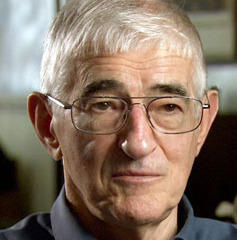
John Dominic Crossan

John Dominic Crossan is a renowned religious scholar and biblical scholar, known for his extensive research on the origins and development of Christianity, particularly focusing on the life and teachings of Jesus. Crossan's works have had a profound impact on Christian theology and history. more

You May Also Like

“The declining age of learning and of mankind is marked, however, by the rise and rapid progress of the new Platonists. The school of Alexandria silenced those of Athens; and the ancient sects enrolled themselves under the banners of the more fashionable teachers, who recommended their system by the novelty of their method and the austerity of their manners. Several of these masters—Ammonius, Plotinus, Amelius, and Porphyry—were men of profound thought and intense application; but, by mistaking the true object of philosophy, their labors contributed much less to improve than to corrupt human understanding. The knowledge that is suited to our situation and powers, the whole compass of moral, natural and mathematical science, was neglected by the new Platonists; whilst they exhausted their strength in the verbal disputes of metaphysics, attempted to explore the secrets of the invisible world, and studied to reconcile Aristotle with Plato, on subjects of which both of these philosophers were as ignorant as the rest of mankind. Consuming their reason in these deep but unsubstantial meditations, their minds were exposed to illusions of fancy. They flattered themselves that they possessed the secret of disengaging the soul from its corporeal prison, claimed a familiar intercourse withe dæmons and spirits; and, by a very singular revolution, converted the study of philosophy into that of magic. The ancient sages had derided the popular superstition; after disguising its extravagance by the this pretense of allegory, the disciples of Plotinus and Porphyry becomes its most zealous defenders. As they agreed with the Christians in a few mysterious points of faith, they attacked the remainder of their theological system with all the fury of civil war. The new Platonists would scarcely deserve a place in the history of science, but in that of the church the mention of them will very frequently occur.”

“Other historians have confined themselves to the recording of victories in war and triumphs over enemies, of the exploits of the commanders and the heroism of their men, stained with the blood of the thousands they have slaughtered for the sake of children and country and possessions; it is peaceful wars, fought for the very peace of the soul, and men who in such wars have fought manfully for truth rather than for country, for true religion rather than for their dear ones, that my account of God’s commonwealth will inscribe on imperishable monuments; it is the unshakeable determination of the champions of true religion, their courage and endurance, their triumphs over demons and victories over invisible opponents, and the crowns which all this won for them at the last, that it will make famous for all time.”

“...the discoveries at Nag Hammadi reopen fundamental questions. They suggest that Christianity as we know it might not have survived at all. Had Christianity remained multiform, it might well have disappeared from history, along with dozens of rival religious cults of antiquity. I believe that we owe the survival of Christian tradition to the organizational and theological structure that the emerging church developed.”

“We can see, then, how conflicts arose in the formation of Christianity between those restless, inquiring people who marked out a solitary path to self-discovery and the institutional framework that gave to the great majority of people religious sanction and ethical direction for their daily lives. Adapting for its own purposes the model of Roman political and military organization, and gaining, in the fourth century, imperial support, orthodox Christianity grew increasingly stable and enduring. Gnostic Christianity proved no match for the orthodox faith, either in terms of orthodoxy's wide popular appeal...or in terms of its effective organization. To the impoverishment of Christian tradition, gnosticism, which offered alternatives to what became the main thrust of Christian orthodoxy, was forced outside.”

“In an important article, Angelika Neuwirth eloquently described the shortcomings of our field's insularity as a failure to situate the Qur'an in the "thought world" and "epistemic space" of Late Antiquity - a failure she diagnoses as rooted in the subconscious, but nonetheless persistent, tendency of modern scholarship to reproduce the premodern view of early Islamic history as momentous yet "foreign" and somehow outside and beyond the forces exerted by Late Antiquity on Western and European history.”

“When Enlightenment thinkers naturalized Muhammad as a mere man rather than a demonic false prophet, they forged a humanistic intellectual environment that inexorably led to the naturalization of Moses and Jesus as men of history and of their times as well. Hence, the three founders of Judaism, Christianity, and Islam suddenly came to stand on par with one another in the humanists' imaginary, a parity and equilibrium that established the foundations of the very enterprise of the comparative study of religions.”