Quotessence
Home / Quotes / Quote by Peter Adamson

Quote by Peter Adamson

“There's a stronger and more kind of controversial element of Plotinus' view of matter, which is that he actually identifies it with evil, or at least the principle of evil, and the reason for this is that he thinks that the the One, the highest principle, can also be thought of as the Good, and that's kind of surprising like, because he has this negative theology which doesn't allow us to say anything about the One. But he believes that it can be seen as the principle of goodness as well as unity, and that if you think about it, goodness and unity sort of go along with each other.”

Quote by Peter Adamson

Author
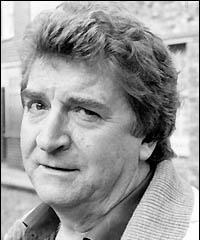
Peter Adamson
Peter Adamson

Peter Adamson was a celebrated television actor known for his diverse and accomplished performances. Born on February 16, 1930, Adamson's career spanned several decades, leaving a profound mark on audiences. He passed away on January 17, 2002. more

You May Also Like

“If you think about even very common examples like, say, something that you would build, like a clock or a car or a group of people trying to accomplish something, it fails when its unity breaks down. So when it stops having a single form, which is functioning all together, then it sort of falls apart into discrete elements.”

“Before the 3rd century you're having several philosophical schools still as a going concern. You have not only the Platonists and the Aristotelians but you have Scepticism, you have Stoicism, you even have a little bit of Epicureanism. And what happens after Plotinus is that everybody becomes a Neo-Platonist. So if we then go forward to the Islamic world for example, Plotinus is immensely influential, and Neo-Platonism becomes at least one major component of mainstream Islamic philosophy as well.”

“I think it's important to realise that what happens in Neo-Platonism beginning with Plotinus and Porphyry and then going on for the next several centuries, is a real kind of contest for the ideas and convictions of the intelligentsia of the later Roman Empire. So that you have Christians slowly converting more and more powerful people until of course actually Constantine and then other emperors after him, become Christian, and the empire becomes a Christian empire rather than Pagan empire.”