Quotessence
Home / Quotes / Quote by David Grossman

Quote by David Grossman

“Only now, in rhythmic waves, was she struck by her stupidity, her blindness, her estheronautiness, and, above all, her longing, the insult of the power of her longing, and she knew very well that is was these shortcomings that had made her so eager to interweave in his story the threads of her secret dreams of candor and of painful, purifying honesty; of a generous togetherness in which everything was possible. For a moment, with all that had been spun and stabbed and defiled within her, her face took on the expression of a frightened, abandoned girl who lunges out to bite, who lives unimaginably close to the skin’s surface, ready to be drawn out like a final plan of retreat.”

Quote by David Grossman

Work

Her Body Knows

Browse quotes and source details for this work. more

Author

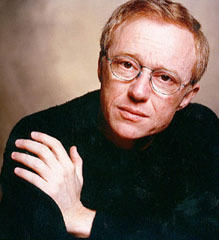
David Grossman
David Grossman

David Grossman is an Israeli author known for his profound literary style and deep insights into war. His works often explore themes of family, love, and war, and are highly appreciated by readers. more

You May Also Like

“Your moral code begins by damning man as evil, then demands that he practice a good which it defines as impossible for him to practice…It demands that he starts, not with a standard of value, but with a standard of evil, which is himself, by means of which he is then to define the good: the good is that which he is not. A sin without volition is a slap at morality and an isolent contradiction in terms: that which is outside the possibility of choice is outside the province of morality. If man is evil by birth, he has no will, no power to change it; if he has no will, he can be neither good nor evil; a robot is amoral. To hold a man’s sin, a fact not open to his choice is a mockery of morality…To punish him for a crime he committed before he was born is a mockery of justice. To hold him guilty in a matter where no innocence exists is a mockery of reason. (The) myth decleares that he ate the fruit of the tree of knowledge-he acquired a mind and became a rational being. It was the knowledge of good and evil-he became a moral being…The evils for which they damn him are reasn, morality, creativeness, joy-all the cardinal values of his existence….the essence of his nature as a man. Whatever he was- that robot in the Garden of Eden, who existed without mind, without values, without labor, without love- he was not a man.”