Quotessence
Home / Quotes / Quote by Peter Kropotkin

Quote by Peter Kropotkin

“All is for all! If the man and the woman bear their fair share of work, they have a right to their fair share of all that is produced by all, and that share is enough to secure them well-being. No more of such vague formulas as "The Right to work," or "To each the whole result of his labour." What we proclaim is The Right to Well-Being: Well-Being for All!”

Quote by Peter Kropotkin

Author
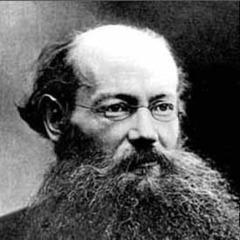
Peter Kropotkin
Peter Kropotkin

Peter Kropotkin was a Russian zoologist, geographer, and anarchist. Born on December 9, 1842, and died on February 8, 1921. Kropotkin is known for his research on mutualism and his contributions to anarchist theory. more

You May Also Like

“But how do European railways manage without them? How do they continue to convey millions of travellers and mountains of luggage across a continent? If companies owning railways have been able to agree, why should railway workers, who would take possession of railways, not agree likewise? And if the Petersburg-Warsaw Company and that of Paris-Belfort can act in harmony, without giving themselves the luxury of a common commander, why, in the midst of our societies, consisting of groups of free workers, should we need a Government?”

“There are those, on the one hand, who hope to achieve the social revolution through the State by preserving and even extending most of its powers to be used for the revolution. And there are those like ourselves who see the State, both in its present form, in its very essence, and in whatever guise it might appear, an obstacle to the social revolution, the greatest hindrance to the birth of a society based on equality and liberty, as well as the historic means designed to prevent this blossoming.”

“True progress lies in the direction of decentralization, both territorial and functional, in the development of the spirit of local and personal initiative, and of free federation from the simple to the compound, in lieu of the present hierarchy from the centre to the periphery.”