Quotessence
Home / Quotes / Quote by Zygmunt Bauman

Quote by Zygmunt Bauman

Author

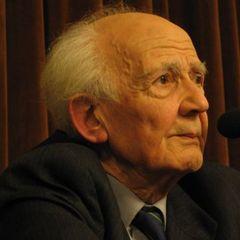
Zygmunt Bauman
Zygmunt Bauman

Zygmunt Bauman (1925-2017) was a Polish-British sociologist and philosopher, widely regarded as one of the most influential social thinkers of the 20th century. He taught sociology at the University of Leeds and was known for his concept of "liquid modernity," which describes the shift from solid, stable social structures to fluid, uncertain conditions. His major works include "Modernity and the Holocaust," "Liquid Modernity," and "Liquid Love." Bauman's analysis of consumer capitalism, social inequality, and the relationship between modernity and genocide has profoundly shaped contemporary sociological thought. more

You May Also Like

“If you look back on the history of the 20th century, the 19th century or even to the ancien régime of the 18th, you will see that first people rebelled against the order of the things because of lack of liberty, and demanded more freedom. And when they got more freedom, they got frightened, and they desired more security for a change. After a while, they started complaining, although more secure, they also become more dependent and rule-bound.”

“In the last thirty years we have gained enormous amount of freedom (everywhere, except perhaps in places like Burma or North Korea), but we lost quite a large amount of security. Because of all sorts of reasons, because of globalization which stripped the nation state of a large part of its sovereignty away, because of the dismantling of the so-called welfare state. As a result, people feel simultaneously much freer and much more insecure.”

“I was watching the TV broadcasts interviewing people stranded at airports for days on end, losing their holidays, their important business meetings and the long-awaited ability to see their families... In short, suffering. No one complained, though! They kept repeating: we are so grateful for the care taken of our safety, for feeling. They were ready to surrender a good deal of their human dignity, individuality, freedom of choice.”