“Silence ought also to be the core of each concert. Remember the anagram: listen = silent.”
Quote by Alfred Brendel
Author
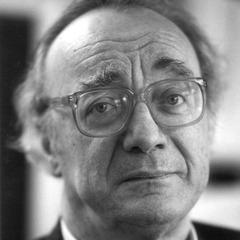
Alfred Brendel
Alfred Brendel (b. January 5, 1931) is widely regarded as one of the most distinguished pianists, writers, and musical thinkers of the twentieth century. Born in Wízovice, Czechoslovakia, and later associated primarily with the Austrian-German musical tradition, Brendel built an international reputation through his penetrating interpretations of the classical and early Romantic repertory, above all the works of Joseph Haydn (海顿), Wolfgang Amadeus Mozart (莫扎特), Ludwig van Beethoven (贝多芬), and Franz Schubert (舒伯特). Rather than cultivating a virtuoso persona defined by brilliance or physical display, he became celebrated for intellectual rigor, structural lucidity, textual fidelity, and an exceptionally refined sense of musical rhetoric. His readings of Beethoven’s sonatas and Schubert’s late works in particular have long been considered reference points in modern performance history. Brendel’s significance lies not only in his recordings and concert career, but also in his role as a public intellectual. His essays, lectures, poems, and aphoristic writings reveal a mind deeply engaged with aesthetics, language, humor, and the ethics of interpretation. He consistently argued that a pianist must do more than produce beautiful sounds: one must understand form, context, irony, and the expressive logic hidden within the score. For this reason, he is often described as a “pianist-philosopher,” an artist who transformed performance into an act of thought. Across a career spanning more than half a century, Brendel helped redefine what seriousness in piano playing could mean. His art combines restraint with emotional depth, clarity with imagination, and discipline with wit. For later generations of musicians and scholars, Alfred Brendel remains a model of how scholarship, artistry, and humane intelligence can coexist at the highest level. more
You May Also Like
Source: Music, Sense and Nonsense: Collected Essays and Lectures
“I don't think an opera house is ever a place that can make you entirely happy.”
“I am moved, shaken, and when it is all over, I look at wonder at what is written or painted.”
Source: Superman: The Greatest Stories Ever Told
Source: Art-as-art: The Selected Writings of Ad Reinhardt
Source: Art-as-art: The Selected Writings of Ad Reinhardt
Source: Art-as-art: The Selected Writings of Ad Reinhardt