Quotessence
Home / Quotes / Quote by Jeffrey Kluger

Quote by Jeffrey Kluger

“If you're an older sibling and you have a younger sibling who needs mentoring or is afraid of the dark, you develop nurturing and empathic skills that you wouldn't otherwise have.”

Quote by Jeffrey Kluger

Author
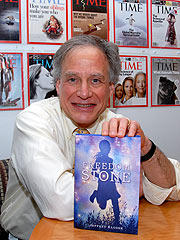
Jeffrey Kluger
Jeffrey Kluger

Jeffrey Kluger is an American writer born in 1954. He is known for his in-depth reporting on science, technology, and cultural phenomena, and has won numerous awards for his work. Kluger has served as an editor and columnist for several prominent media outlets, including Time magazine and Scientific American. His writing style is characterized by clarity, wit, and insight. more

You May Also Like

“I think everyone is struggling somewhat with presentation. The Internet is generally well designed, if you look at the most popular websites, so we expect our visuals to be at that level of quality. When you sit in a presentation and you're looking at nonsensical pie charts and the like, your audience does disengage. People across a range of industries, not just science, are struggling with their communication because their output doesn't compete with what people see on a day-to-day basis.”

“I think that most of us are aware that as writers we are seeking absences, we're seeking silences, we're seeking spaces that people haven't entered. No writer is saying, "Hey, I want to go to this very well trod territory and say exactly what someone else has done." I think the nature of a writer, because we are attempting to bring to light areas that people haven't seen before, tends in some ways to be progressive, at least in that light.”

“If you're a status quo writer, you're considered to not be political but that's as political as if you're a progressive writer. Some politics are asked to show their passports and others aren't. In the Dominican Republique, if you're slightly progressive, people have a lot of suspicions that you're up to some sort of conspiracy, that this is some sort of plot. On the other hand, if you're conservative and mainstream, people tend to take that as a given and don't notice the politics.”

“I will say that the difference was that when you're an Army journalist, as opposed to a civilian correspondent covering the military, you're very often either a public relations agent or expected to perform that role. I would say that one of the most unexpected benefits of that job was being taught to never try to cover anything up, but rather to get any bad information out right away, so that there would be nothing more to come out later. This was a wonderful lesson to be taught because often the effort to cover up a story becomes a bigger story than the original one.”

“One thing about winning a Pulitzer, it means you know what the first three words of your obituary will be: Pulitzer Prize-winner. After winning the Pulitzer, I couldn't help but notice how people suddenly looked at me with a newfound respect, and would say, "He's an expert." On the negative side, I developed a terrible case of writer's block for awhile, because I felt like readers would expect every one of my columns to be prize worthy.”