Quotessence
Home / Quotes / Quote by Roger Zelazny

Quote by Roger Zelazny

Work

Lord of Light

Browse quotes and source details for this work. more
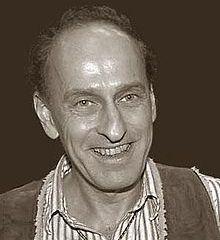
Author

Roger Zelazny
Roger Zelazny

Roger Zelazny was an American science fiction and fantasy writer known for his unique literary style and rich imagination. His works spanned a wide range of genres from science fiction to fantasy, with his most famous series including 'The Chronicles of Amber' and 'Avalon'. Zelazny began his writing career in the 1950s, and his works have had a profound impact on science fiction and fantasy literature in the following generations. more

You May Also Like

“Mary! Mary! My dear, let me reason with you. I hate reasoning, John,—especially reasoning on such subjects. There's a way you political folks have of coming round and round a plain right thing; and you don't believe in it yourselves, when it comes to practice. I know you well enough, John. You don't believe it's right any more than I do; and you wouldn't do it any sooner than I.”

“Sam, no!” Edilio snapped. Sam missed a step, then stopped. He looked at Edilio, puzzled. “We’re scattered. And we can’t risk you. You die and the light dies with you.” “Are you out of your mind? You think I’m going to let Drake come in here and take Diana?” “Not you, Sam. Dekka, yes. Orc, yes. He’s out there, too. And send Jack as well. Anyone but you.” Sam looked like he’d been punched. Like someone had knocked the wind out of him. He blinked and started to say something and stopped. “You aren’t replaceable, Sam. Figure it out, okay? It’s going dark and you make light. So this isn’t going to be your battle. Not now. It’s on the rest of us to step up.”

“It seems a bad thing and detrimental to the creative work of the mind if Reason makes to close an examination of the ideas as they come pouring in -at the very gateway, as it were. Looked at in isolation, a thought may seem very trivial or very fantastic; but it may be made important by another thought that comes after it, and in conjunction with other thoughts that may seem equally absurd, it may serve to form a most effective link. Reason cannot form any opinion on all this unless it retains the thought long enough to look at it in connection with the others. On the other hand, where there is a creative mind, Reason -so it seems to me- relaxes its watch upon the gates, and the ideas rush in pell-mell, and only then does it look them through and examine them in a mass.”

“The century of Einstein and Planck was also the century of Hitler. The Gestapo and the scientific renaissance were children of the same age. How humane the nineteenth century seemed, that century of naive physics, when compared with the twentieth century, the century that had killed his [Viktor's] mother. There is a terrible similarity between the principles of Fascism and those of contemporary physics. Fascism has rejected the concept of a separate individuality, the concept of "a man," and operates only with vast aggregates. Contemporary physics speaks of the greater or lesser probability of occurrences within this or that aggregate of individual particles. And are not the terrible mechanics of Fascism founded on the principle of quantum politics, of political probability? Fascism arrived at the idea of the liquidation of entire strata of the population, of entire nations and races, on the grounds that there was a greater probability of overt or covert opposition among these groupings than among others: the mechanics of probabilities and of human aggregates. But no! No! And again no! Fascism will perish for the very reason that it has applied to man the laws applicable to atoms and cobblestones! Man and Fascism cannot co-exist. If Fascism conquers, man will cease to exist and there will remain only man-like creatures that have undergone an internal transformation. But if man, man who is endowed with reason and kindness, should conquer, then Fascism must perish, and those who have submitted to it will once again become people.”