Quotessence
Home / Quotes / Quote by Peter Matthiessen

Quote by Peter Matthiessen

Author

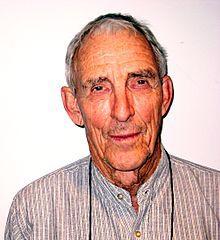
Peter Matthiessen
Peter Matthiessen

Peter Matthiessen was an American novelist and naturalist, renowned for his works that seamlessly integrate fiction and non-fiction. His writing frequently delved into environmental themes and the human connection with nature. Born on May 22, 1927, he passed away on April 5, 2014. more

You May Also Like

“In his poems and in his teaching of other poets, Bashō set forth a simple, deeply useful reminder: that if you see for yourself, hear for yourself, and enter deeply enough this seeing and hearing, all things will speak with and through you. “To learn about the pine tree,” he told his students, “go to the pine tree; to learn from the bamboo, study bamboo.” He found in every life and object an equal potential for insight and expansion. A good subject for haiku, he suggested, is a crow picking mud-snails from between a rice paddy’s plants. Seen truly, he taught, there is nothing that does not become a flower, a moon. “But unless things are seen with fresh eyes,” he added, “nothing’s worth writing down.” A wanderer all his life both in body and spirit, Bashō concerned himself less with destination than with the quality of the traveller’s attention. A poem, he comments, only exists while it’s on the writing desk; by the time its ink has dried, it should be recognized as just a scrap of paper. In poetry as in life, he saw each moment as gate-latch. Permeability mattered more in this process than product or will: “If we were to gain mastery over things, we would find their lives would vanish under us without a trace.”

“This is why modern civilization is in almost every respect a vicious circle. It is insatiably hungry because its way of life condemns it to perpetual frustration. [...] [T]he root of this frustration is that we live for the future, and the future is an abstraction, a rational inference from experience, which exists only for the brain. The "primary consciousness," the basic mind which knows reality rather than ideas about it, does not know the future. It lives completely in the present, and perceives nothing more that what is at this moment. The ingenious brain, however, looks at that part of present experience called memory, and by studying it is able to make predictions. These predictions are, relatively, so accurate and reliable (e.g., "everyone will die") that the future assumes a high degree of reality - so high that the present loses its value.”

“Zen would say that in adopting, too completely, the scientific view of reality we have closed the door on a more holistic view of life and are limiting ourselves to a rather mundane view of something altogether extraordinary. Zen maintains that our dualistic view of life means that whatever we perceive goes through our mental filtering systems before being cognitively understood. We use mental boxes for all aspects of our daily lives so we can make sense of our world and interact with oth- ers. With the development of language, though, this cognitive grasp of reality means that everything we perceive is subject to these men- tal processes, and so from early childhood we lose the ability to directly perceive the world. This is the point where dualism starts.”

“Het losstaan van één specifieke traditie beaam ik als legitiem, maar het losstaan van traditie als zodanig beschouw ik als slechts één zijde van een munt, en als niet geheel terecht. Enerzijds is uitsluitend *nu* van belang, en daarin valt traditie inderdaad weg, maar anderzijds is het van belang ook te blijven erkennen wat precies de bronnen zijn geweest voor het inzicht dat 'louter nu van belang is'. Dat zijn toch de teksten uit de verschillende oosterse non-dualistische tradities, de teksten die juist omdat ze het tijdloze benadrukken, nu nog volkomen tijdloos en fris zijn gebleven. Ik zie het als wezenlijk dat ook de westerse leraar deze oosterse tradities onder de aandacht blijft brengen - althans de tijdloze kern ervan, datgene wat na onderzoek overblijft als waardevol, en wat om die reden het verdient om zo helder en verstaanbaar mogelijk in westerse taal vertaald en doorgegeven te worden.”