Quotessence
Home / Quotes / Quote by Howard Zinn

Quote by Howard Zinn

“In September 1973, a former government official in Laos, Jerome Doolittle, wrote in the New York Times: The Pentagon's most recent lies about bombing Cambodia bring back a question that often occurred to me when I was press attache at the American Embassy in Vietnam, Laos. Why did we bother to lie? When I first arrived in Laos, I was instructed to answer all press questions about our massive and merciless bombing campaign in that tiny country with: "At the request of the Royal Laotian Government, The United States is conducting unarmed reconnaissance flights accompanied by armed escorts who have the right to return if fired upon." This was a lie. Every reporter to whom I told knew it was a lie. Hanoi knew it was a lie. The International Control Commission knew it was a lie. . . . After all , the lies did serve to keep something from somebody, and the somebody was us.”

Quote by Howard Zinn

Work

A People’s History of the United States: 1492 - Present

Browse quotes and source details for this work. more

Author
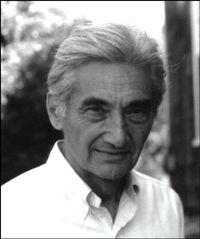
Howard Zinn
Howard Zinn

American historian known for his critical analysis of historical events and advocacy for social justice. His work emphasizes the connection between history and contemporary social issues, particularly focusing on the role of ordinary people in the historical process. more

You May Also Like

“As Pa speaks, I know he thinks someone in our family has stolen the rice. The story of the rat is not true and everyone knows it. Convinced that he realises it was me, I hide my eyes from him. Shame burns my hand like a hot iron branding me for all to see; Pa's favourite child stole from the family. As if to rescue me,Geak wakes up and her screams of hunger interrupt the incident.”

“The archaeologists who made the study noted that ‘Southern Indian ancestry was estimated at 42–49%’ for the Cambodian individual whose remains they were studying. They identified ‘Irula, Mala, and Vellalar’ caste types as the most likely South Asian contributors to the ancient individual’s genome. These are all specifically low-caste non-Brahmin groups. It appears that we are dealing with the emigration of a large and socially varied group of Indian individuals, leading to intermarriage with Cambodians and the emergence of mixed-marriage families. This implies a varied mercantile diaspora rather than just the boatloads of literate Brahmins who record their own presence on inscriptions. It also helps explain the presence of non-Vedic, non-Brahmanical Tamil folk and village guardian deities like Aiyanar turning up from the beginning in shrines across the region, where he seems to have been worshipped as the Protector of Travellers and the Night Guardian of Reservoirs”

“Whatever their DNA contribution to the region, the Brahmins did bring with them from India three crucial gifts that proved irresistible right across the region: Sanskrit, the art of writing and the stories of the great Indian epics. No Indian import had a deeper or more long-lasting impact than the deeds of the heroes of the Mahabharata and the Ramayana. From the fifth century, right on through to the dance and shadow puppetry of the present day, these would remain a major feature in the art and culture of South-east Asia.26 In time, even the landscape of South-east Asia began to be renamed under the influence of the great epics and the stories of their respective heroes, the Pandava brothers and Lord Rama. The earliest inscription in Khmer territories dating from the fifth century records that a ruler in what is now Laos took the Indic name Devanika and the grandiose Sanskrit title Maharajadhiraja, ‘King of Kings’. This happened during a ceremony when the King installed an image of Shiva under the lingam-shaped mountain that towered over his capital of Champasak. There he consecrated a tank which he named Kurukshetra, after the plain to the north of Delhi where the great battle of the Mahabharata was fought”

“Cambodian dust whipped up in the wind and stuck to my clothes like clay. I put a hand between my face and the sun and blinked Phnom Penn dust from my tired eyes. One idea, drink, beamed light in all directions across my dark consciousness. A slim lady walked toward me with a big smile and a bigger head. Her left hand rested on her waggling hips and her right hand rose above her head, limp-wristed, like she’d just thrown a winning ball toward a basket and was leaving her hand in the shot position. The lady walking toward me was a man. At least that much was clear, but the nature or our relationship was still a fog to me. She wore blue jeans and a white top accentuating her breasts, but her Adam’s apple and cow sized hands revealed more in daylight than she could hide at night.”

“Mother’s tenderness toward my younger sisters caused more tears to pool in my eyes. I felt too old to be hugged and caressed by her, yet my body yearned for her touch; at least this once. I couldn't recall the last time she had shared the same warmth with me. The countless months of hardship had created an ocean of distance between us. It would be too awkward to hug her now. I sat across from her with tear-stained cheeks, wondering if she could feel my sadness and if she knew I loved her unconditionally.”

“A story, I had learned, through my own constant knitting and reknitting of remembered words, can lead us back to ourselves, to our lost innocence, and in the shadow it casts over our present world, we begin to understand what we only intuited in our naivété - that while all else may vanish, love is our one eternity. It reflects itself in joy and grief, in my fathers sudden knowledge that he would not live to protect me, and in his determination to leave behind a part of himself - his spirit, his humanity - to illuminate my path, give light to my darkened world. He carved his silhouette in the memory of the sky for me to return to again and again.”