“Contrary to implicit tenets of the green movement, not all that is natural is beautiful, and not all that is beautiful is natural. Maybe that's why the world needs poets. Not to interpret what is plain and obvious, but to help us take pause and reflect on the beauty of people, places, and ideas—things we might otherwise take for granted. Simple beauty that emanates from simple truths.”
Quote by Neil deGrasse Tyson
Work
Starry Messenger: Cosmic Perspectives on Civilization
Browse quotes and source details for this work. more
Author
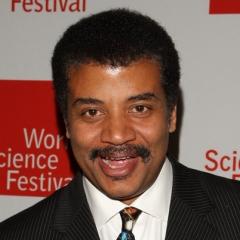
Neil deGrasse Tyson
Neil deGrasse Tyson is an American astrophysicist, science communicator, and television personality. Born on October 5, 1958, he is renowned for his deep understanding of the cosmos and his ability to popularize scientific knowledge. Tyson grew up in New York City and earned a Ph.D. in astronomy from Columbia University. He served as the director of the Hayden Planetarium at the American Museum of Natural History and has been a member of various scientific committees. more
You May Also Like
Source: সেরা ৫০টি গল্প
“I am 15 and you are 51, I know you are the best, to be loved by, everyone.”
Source: Black Queer Hoe
“Approval is a weapon that I hand to everyone I know hoping they are a pacifist.”
Source: Untruthful
Source: Hope in Every Raindrop
“Some nights are not meant for sleeping. They are meant for writing and reading Poetry.”
Source: The Dove Upon Her Branch: A Novel Portrait of Christina Rossetti