Quotessence
Home / Quotes / Quote by Markus Zusak

Quote by Markus Zusak

“I could smell something. Fear. I could taste it now. It tasted like blood in my mouth, and I could feel it slide through me and open me up when I saw him ...”

Quote by Markus Zusak

Work

Getting The Girl

This book centers on a teenage boy navigating the challenges of high school life while trying to win the affection of a girl he admires. The story delves into themes of friendship, self-discovery, and the often awkward and humorous realities of adolescent romance, offering a relatable perspective on the trials of young love. more
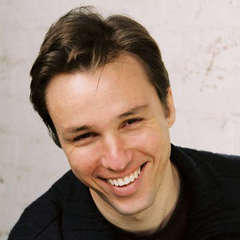
Author

Markus Zusak
Markus Zusak

Markus Zusak, born on June 23, 1975, is an acclaimed Australian author known for his unique narrative style and profound thematic insights. His works have garnered widespread praise from readers and critics alike. more

You May Also Like

“O all you host of heaven!O Earth! waht else? And shall i couple hell? O Fie! Hold, hold, my heart And you, my sinews, grow not instant old, But bear me stiffly up. Remember thee? Ay, thou poor ghost, while memmory holds a seat In this distracted globe. Remember thee? Yea, from the table of my memory I'll wipe away all trivial fond records, All saws of books, all forms, all pressures past That youth and observation copied there, And thy commandment all alone shall live Within the book and volume of my brain, Unmixed with baser matter; yes, by heaven!”

“He thought with a kind of astonishment of the biological uselessness of pain and fear, the treachery of the human body which always freezes into inertia at exactly the moment when a special effort is needed. He might have silenced the dark-haired girl if only he had acted quickly enough; but precisely because of the extremity of danger he had lost the power to act. It struck him that in moments of crisis one is never fighting against an external enemy but always against one's own body. Even now, in spite of the gin, the dull ache in his belly made consecutive thought impossible. And it is the same, he percieved, in all seemingly heroic or tragic situatuions. On the battlefield, in the torture chamber, on a sinking ship, the issues that you are fighting for are always forgotten, because the body swells up until it fills the universe, and even when you are not paralyzed by fright or screaming with pain, life is a moment-to-moment struggle against hunger or cold or sleeplessness, against a sour stomach or an aching tooth.”

“[T]he relentless note of incipient hysteria, the invitation to panic, the ungrounded scenarios--the overwhelming and underlying desire for something truly terrible to happen so that you could have something really hot to talk about--was still startling. We call disasters unimaginable, but all we do is imagine such things. That, you could conclude mordantly, is the real soundtrack of our time: the amplification of the self-evident toward the creation of paralyzing, preëmptive paranoia.”

“My brothers’ faces haunt me. I hear their children, my nieces and nephews, asking me why I came home without their daddies. I think of their wives, imagine their questions. Our parents, forever seeing the faces of their lost sons when they look at me. They will want answers, demand to know how I survived. And what do I tell them? That I huddled like a baby inside my tent while their killer beckoned me forth for one last stand?”