Quotessence
Home / Quotes / Quote by Charles Dickens

Quote by Charles Dickens

“What do you mean, Phib?" asked Miss Squeers, looking in her own little glass, where, like most of us, she saw - not herself, but the reflection of some pleasant image in her own brain.”

Quote by Charles Dickens

Work

Nicholas Nickleby

Charles Dickens' 'Nicholas Nickleby' is a classic novel that delves into the harsh realities of 19th-century English society. The story revolves around the protagonist, Nicholas Nickleby, as he navigates through various challenges, including his family's financial struggles and the corrupt world of education. The novel is renowned for its vivid portrayal of social issues and its memorable characters, offering readers a glimpse into the lives of the poor and the wealthy alike. more
Author

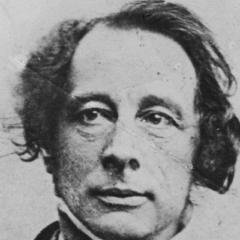
Charles Dickens
Charles Dickens

Charles Dickens, a British writer born on February 7, 1812, and died on June 9, 1870, is one of the greatest novelists of the 19th century. Known for his profound social criticism and vivid narrative style, Dickens' works extensively cover social reality, revealing various issues in the British society of the time. more

You May Also Like

“[He] seemed to possess, beneath it all, an immutable sense of self-assurance, but in addition to that, the look of a man ensnared by what he perceived to be his own Duty. A Duty that effervesced inside of him impatiently, dry at the mouth, shaking feverishly, and holding its breath in anticipation for—not his action, but in fact—the fruits of his actions, however distant these may have been. The goal was to satiate its thirst in as few moves as possible, instilling each action with an almost implied necessity for having a motive by which it must exist, which is to say that no action was to be wasted for anything, but only for that which was rooted in some definable and clear-cut purpose...Every action had to be a step in some direction and there could be no dillydallying, for Duty bubbling in the bloodstream for too long brought with it a kind of sickness...from which it was difficult to recover. Neither could there be any reconsideration, for the values to which one has sworn were unassailable and beyond the powers of one individual to reassess. And so, Duty, once instilled, must be allowed to carry on unabated, diverting sustenance away from other aspects of one’s character—driving them to a weakened state, brow-beaten by circumstances beyond their immediate control and relegated to their own downtrodden acquiescence to the bravado of the Parasitic Superego, and, as such, cognizant of their growing superfluity.”

“She possessed a strong faculty for simply refusing to admit an unpleasant situation, and going quite blank where it was concerned. If, for instance, you had asked her whether, eighteen years before, she had undergone a face-lifting operation, she would have denied it, and believed the denial, and moreover would have supplied gratuitously, as a special joke, a list of people who had 'really' had their faces lifted or undergone other rejuvenating operations.”