Quotessence
Home / Quotes / Quote by Simone de Beauvoir

Quote by Simone de Beauvoir

“Art, literature, and philosophy are attempts to found the world anew on a human freedom: that of the creator; to foster such an aim, one must first unequivocally posit oneself as a freedom. The restrictions that education and custom impose on a woman limit her grasp of the universe...Indeed, for one to become a creator, it is not enough to be cultivated, that is, to make going to shows and meeting people part of one's life; culture must be apprehended through the free movement of a transcendence; the spirit with all its riches must project itself in an empty sky that is its to fill; but if a thousand fine bonds tie it to the earth, its surge is broken. The girl today can certainly go out alone, stroll in the Tuileries; but I have already said how hostile the street is: eyes everywhere, hands waiting: if she wanders absentmindedly, her thoughts elsewhere, if she lights a cigarette in a cafe, if she goes to the cinema alone, an unpleasant incident can quickly occur; she must inspire respect by the way she dresses and behaves: this concern rivets her to the ground and self. "Her wings are clipped." At eighteen, T.E. Lawrence went on a grand tour through France by bicycle; a young girl would never be permitted to take on such an adventure...Yet such experiences have an inestimable impact: this is how an individual in the headiness of freedom and discovery learns to look at the entire world as his fief...[The girl] may feel alone within the world: she never stands up in front of it, unique and sovereign.”

Quote by Simone de Beauvoir

Work

The Second Sex

Written by Simone de Beauvoir, this influential book delves into the complexities of gender identity and the social construction of femininity and masculinity. It examines the ways in which women are marginalized and the implications of this on their personal and societal lives. more

Author
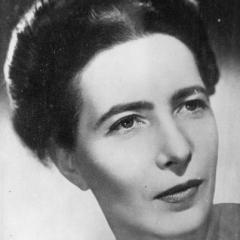
Simone de Beauvoir
Simone de Beauvoir

Simone de Beauvoir was a French writer, philosopher, feminist, and social activist. Known for her profound philosophical thoughts and her advocacy for women's status, she is one of the most influential female thinkers of the 20th century. Her works spanned various genres, including novels, philosophical essays, plays, and memoirs, with her most famous work being 'The Second Sex'. more

You May Also Like

“But they can rule by fraud, and by fraud eventually acquire access to the tools they need to finish the job of killing off the Constitution.' 'What sort of tools?' 'More stringent security measures. Universal electronic surveillance. No-knock laws. Stop and frisk laws. Government inspection of first-class mail. Automatic fingerprinting, photographing, blood tests, and urinalysis of any person arrested before he is charged with a crime. A law making it unlawful to resist even unlawful arrest. Laws establishing detention camps for potential subversives. Gun control laws. Restrictions on travel. The assassinations, you see, establish the need for such laws in the public mind. Instead of realizing that there is a conspiracy, conducted by a handful of men, the people reason—or are manipulated into reasoning—that the entire population must have its freedom restricted in order to protect the leaders. The people agree that they themselves can't be trusted.”

“I used to think freedom was freedom of speech, freedom of the press, freedom of conscience. But freedom is the whole life of everyone. Here is what it amounts to: you have to have the right to sow what you wish to, to make shoes or coats, to bake into bread the flour ground from the grain you have sown, and to sell it or not sell it as you wish; for the lathe operator, the steelworker, and the artist it’s a matter of being able to live as you wish and work as you wish and not as they order you to. And in our country there is no freedom – not for those who write books nor for those who sow grain nor for those who make shoes.” (Grossman, p. 99) He noted that “In people’s day-to-day struggle to live, in the extreme efforts workers put forth to earn an extra ruble through moonlighting, in the collective farmers’ battle for bread and potatoes as the one and only fruit of their labor, he [Ivan Grigoryevich] could sense more than the desire to live better, to fill one’s children’s stomachs and to clothe them. In the battle for the right to make shoes, to knit sweaters, in the struggle to plant what one wished, was manifested the natural, indestructible striving toward freedom inherent in human nature. He had seen this very same struggle in the people in camp. Freedom, it seemed, was immortal on both sides of the barbed wire.” (Grossman, p. 110)”

“أعرف أنك تجلس وأنت غارق في سوء الحال تنتظر اليوم الذي تتحقق فيه المعجزة ويتغير فيه حاكم مصر لينصلح حالها، لكن ذلك لن يحدث أبدًا طالما لم أدرك أنا وأنت أن سوء الحال نابع من سوء الأداء، لو لم يسأل كل منا نفسه عما فعله لإصلاح ما حوله أو الاعتراض عليه، لو لم يدرك كل منا أن معركته الحقيقية تبدأ من داخل بيته وأنه إذا لم ينتصر فيها أولاً فلن ننتصر في أي شيء، لو لم يدرك كل منا أن خلاصنا في تثوير القرآن وتطبيق مقاصد الإسلام قبل أشكاله، لو لم يدرك كل منا أننا لا شيء بدون الحرية والعلم وأن الحقوق تنتزع ولا توهب، وأننا سنظل مهددين بالتوربيني الصغير طالما سمحنا للتوربينات الكبار أن يرتعوا في الأرض فاسدين مكتفين بالشتيمة والسخط والكوميديا السوداء.”

“Used to the conditions of a capitalistic environment, the average American takes it for granted that every year business makes something new and better accessible to him. Looking backward upon the years of his own life, he realizes that many implements that were totally unknown in the days of his youth and many others which at that time could be enjoyed only by a small minority are now standard equipment of almost every household. He is fully confident that this trend will prevail also in the future. He simply calls it the American way of life and does not give serious thought to the question of what made this continuous improvement in the supply of material goods possible.”

“There are members of our body politic who tell us that the public interest is best served when government action is reduced to a minimum and especially when it is kept negative in character. But just now, the nation as a whole seems to be moving rather swiftly and decisively—as is the world as a whole—in the opposite direction. More and more, we Americans are initiating new forms of positive government action for the common good. Between these two tendencies the struggle becomes every day more open and more intense. And as we wage that conflict it is well to remember that the logic of the Constitution gives no backing to either of the two combatants, as against the other. We are left free, as any self-governing people must leave itself free, to determine by specific decisions what our economy shall be. It would be ludicrous to say that we are committed by the Constitution to the economic cooperations of socialism. But equally ludicrous are those appeals by which, in current debate, we are called upon to defend the practices of capitalism, of "free enterprise," so-called, as essential to the freedom of the American Way of Life. The American Way of Life is free because it is what we Americans freely choose—from time to time—that it shall be.”