Quotessence
Home / Quotes / Quote by Alexei Navalny

Quote by Alexei Navalny

“Neither Yeltsin nor the leaders of Ukraine and Belarus were to blame for its collapse. The Soviet Union was destroyed by the Communist Party and the KGB. The former, through the lies, hypocrisy, and incompetent management of its senile leaders, reduced the country to a state of economic crisis. The latter, in the person of its chairman, Vladimir Kryuchkov, attempted a coup that was bungled as badly as everything else they had done in earlier years. Most researchers of the August putsch believe Chairman Kryuchkov was the main actor among the conspirators. At that time, Lieutenant Colonel Vladimir Putin, working in the Leningrad department of the KGB, was by no means making a fuss about geopolitical disasters but, in pursuit of money and new opportunities, cheerfully leaving the ranks of his organization in order to throw in his lot with the mayor of Leningrad, Anatoly Sobchak, one of Yeltsin's main supporters. In other words, Putin was unquestionably one of those with a direct interest in the collapse of the U.S.S.R., helping it along and extracting maximum benefit from it. I don't want to exaggerate Putin's personal role or assert that he particularly betrayed his organization. He simply acted in his own interests. One day he was out catching dissidents on the streets of Leningrad who would be sent to prison for "anti-Soviet propaganda," and the next he was the bag carrier of one of the new regime's most radical supporters.”

Quote by Alexei Navalny

Work

Patriot: A Memoir

Browse quotes and source details for this work. more

Author
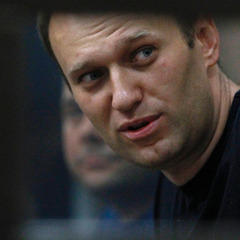
Alexei Navalny
Alexei Navalny

Alexei Navalny is a Russian lawyer and political activist recognized for his anti-corruption efforts and criticism of the Russian government. Born on June 4, 1976, he has gained international acclaim for his work in exposing corruption within the Russian political establishment. more

You May Also Like

“I finish writing the emails and send them. I check that Yulia has access to the banking apps-a fairly pointless exercise because all my accounts have been frozen for months by lawsuits filed by "Putin's chef," Yevgeny Prigozhin, a man who, in the days of the U.S.S.R., was convicted of aggravated robbery but has now become, thanks to his friendship with Putin, "a successful entrepreneur" with a monopoly on the food supply to the day cares and schools of Moscow. We are running out of time. One more meeting is scheduled. I call Leonid Volkov, our chief of staff, Maria, and Kira. Yulia joins us. We briefly discuss the plan of action for each possible scenario: we get home without hindrance; I am arrested at the airport and jailed; I am detained, then released, and the Kremlin waits for the indignation to subside and then has me arrested; nothing happens, but I am arrested in a couple of weeks on a different charge, and so on. These scenarios are approaches the Kremlin has already used on us. In the twenty-first century you are confronted not just by the machinery of a repressive state but by the PR machinery of that state. Public opinion is what matters to all the players. The same action performed in subtly different ways can either leave people unmoved or enrage them and bring them out onto the streets to demonstrate. Everything has to be taken into account, including what day of the week it is and the weather.”

“Mikhailova anticipates they might detain me after I have passed through the turnstile, that is, after formally crossing the border. I would then be taken away quickly. So she will go through first, then I, then Yulia. these are important issues we need to discuss if we are to be prepared for every eventuality, but I do not actually believe I will face any threats on the day of arrival. I have long ago given up trying to analyze and predict the behavior of Putin and the Kremlin. There is just too much irrationality in it. Putin has been in power for more than twenty years, and like that of any other leader in history who has stuck around that long, his head is filled with messianic obsessions, all that "No Putin, No Russia" stuff, openly proclaimed from the rostrum of the State Duma. The real balance of power between the sundry groups in the Kremlin is also unknown, no matter what the political analysts choose to write. So it is futile to try calculating what "they" might do next, and we have to do what we think is right. We have, however, a general understanding of how the media and public opinion function. More or less all we know about Putin's technique for ruling is that he conducts endless opinion polls and takes account of the results in his planning. Arresting me at the airport would not be in his interests. Of all the scenarios for isolating me, this is the one most favorable for me. In the first place, the European Court has already ruled on the Yves Rocher case, recognizing that I am innocent. I make that point during our discussion: "Are you trying to tell me they will arrest me on a charge that has already been ruled against by the European Court of Human Rights? You must be joking." Arresting me for "failing to observe the conditions of a suspended sentence" would be too cynical, even by the standards of the Kremlin. First they try to poison me, and then, when I am in a coma and in intensive care, they announce, "Oh, look, he has failed to register with the police. Let's imprison him on that county." If they try it, they will immediately lose the battle for the first bastion of public opinion, the journalists who follow closely how the situation is developing. My period of probation in a case they brought in 2014 ended, after numerous extensions, on December 30, 2020, eighteen days ago. So it is no longer possible to revoke my suspended sentence. Obviously, no such trifling matter as the law will ever deter a Russian judge, for whom the only thing that matters is the telephone call in which his boss gives him his orders. But why make everything difficult, why attract attention, and, most important, why whip up sympathy for me with blatantly illegal harassment? At his most recent press conference Putin referred to me dismissively with a phrase that had clearly been though through and characterizes his latest tactic: "Who cares about him?" So would it not make the best sense to operate within that framework and ignore my return? Reduce a big deal to a puff of smoke? Instead of providing journalists with the anticipated great shots of me being arrested, let them have a video of me coming out of the airport with my luggage, unsure what to do with myself while waiting for a taxi? Then, after a couple of weeks, when the fuss is over, call me in for questioning on the latest fabricated criminal charge. A couple of months after that, impose house arrest. Three months or so after that, move me to a prison with a short sentence, then renew it. Then just keep me there. Everyone will have gotten used to it by then. Why would anyone protest when I'd been in prison for ages? No, Putin is nuts, but he's not going to be crazy enough to create a major incident by arresting me at the airport.”

“In 1999, when Vladimir Putin came to power, many thought he was wonderful. He was young, he didn't drink like Yeltsin, and he seemed to be saying all the right things. That strengthened the hope that everything would at last be put right. This talk really annoyed me. I didn't like the idea of Putin as "successor"; I wanted a genuine presidential election, with competing candidates. If we imagine that Putin was a Communist who campaigned and won fairly, I would have been very upset, but I would have accepted the result. Now, though, Putin was being foisted on Russia as payment for his loyalty and willingness to provide legal immunity to the former president and his family. I knew that I couldn't believe a word Putin said. his appointment made me determined to resist. I didn't want someone of that kind to be the leader of my country. My feelings were very strong. I wanted to register my presence as far removed from Putin as possible, on the opposite side of the political arena, so that later, when I was a grandfather, I would be able to tell my grandchildren, "I was against it from the outset!" All that remained was to decide which party to join. The Communists still had the largest organization and were the obvious choice for someone who wanted to make it clear they were opposed to Yeltsin's successor, but for me the merest hint of the Soviet past was like a red cape to a bull. The Liberal Democratic Party of Russia seemed to be in opposition, but I did not trust its leader, Vladimir Zhirinovsky, to stand up to the new regime. In the democratic wing, there were the Union of Right Forces (URF) and Yabloko. The former included some well-known officials like Anatoly Chubais and Boris Nemstov (both of whom seemed to me then to be Young Community League types). Yabloko, which bore more resemblance to a bunch of amiable nerds, was the only genuinely democratic party, overtly opposed to Putin, and that seemed preferable. My decision must have seemed odd to some people, and I might have hesitated longer, but I wanted my position to be absolutely clear: I would join the opposition. When there was talk that the electoral threshold to the Duma could be raised from 5 percent to 7 percent, and there were doubts as to whether a democratic party would be able to achieve the new minimum, that only increased my motivation. So I took myself off to Yabloko's headquarters in the center of Moscow. It was not at all how I had pictured the headquarters of a parliamentary party. It was a complete shambles.”

“In 1999 Putin was not a public figure accustomed to journalists and the free exchange of information. In the perestroika years Putin had been stationed in Germany as a KGB officer, and he missed everything that happened, including Gorbachev’s campaign of glasnost—or openness—when newspapers were competing to expose Stalinist crimes; Soviet apparatchiks argued with dissidents like Andrei Sakharov at Congress of People’s Deputies, broadcast in real-time on television; and the pages of democratic Moskovskie Novosti were read aloud by Muscovites on Pushkin Square. Putin had little idea of how the West functioned from his posting in East Germany, which was under total control of the secret services. He missed even the fall of the Berlin Wall, because he was serving in Dresden, 125 miles south of Berlin.”

“Russian military is a quintessential reflection of the state that created it. Autocratic, security-obsessed, and teeming with hyper centralized decision making, dysfunctional relations between civilian and military authorities, inefficiency, corruption and brutality. [Professor Zoltan Barany, January 2023]”

“Learning to live with wounded places is a mission threaded with find¬ing and making beauty. If I’m open to the likelihood of it, I can always find beauty under any circumstances, whether it’s in a kindly gesture from a stranger or the first shoot of greenery shoving up through the waste of a calamitous event. Beauty is the antidote to grief and despair, and it is the one sure thing I can bring to bear when I confront a place that has fallen on hard times.”

“Putin was a former KGB intelligence officer who’d been stationed in East Germany at the Dresden headquarters of the Soviet secret service. Putin has said in interviews that he dreamed as a child of becoming a spy for the communist party in foreign lands, and his time in Dresden exceeded his imagination. Not only was he living out his boyhood fantasy, he and his then-wife also enjoyed the perks of a borderline-European existence. Even in communist East Germany, the standard of living was far more comfortable than life in Russia, and the young Putins were climbing KGB social circles, making influential connections, networking a power base. The present was bright, and the future looked downright luminous. Then, the Berlin wall fell, and down with it crashed Putin’s world. A few days after the fall, a group of East German protestors gathered at the door of the secret service headquarters building. Putin, fearing the headquarters would be overrun, dialed up a Red Army tank unit stationed nearby to ask for protection. A voice on the other end of the line told him the unit could not do anything without orders from Moscow. And, “Moscow is silent,” the man told Putin. Putin’s boyhood dream was dissolving before his eyes, and his country was impotent or unwilling to stop it. Putin despised his government’s weakness in the face of threat. It taught him a lesson that would inform his own rule: Power is easily lost when those in power allow it to be taken away. In Putin’s mind, the Soviet Union’s fatal flaw was not that its authoritarianism was unsustainable but that its leaders were not strong enough or brutal enough to maintain their authority. The lesson Putin learned was that power must be guarded with vigilance and maintained by any means necessary.”