Quotessence
Home / Quotes / Quote by Maya Angelou

Quote by Maya Angelou

“The Black female is assaulted in her tender years by all those common forces of nature at the same time that she is caught in the tripartite crossfire of masculine prejudice, white illogical hate and Black lack of power. The fact that the adult American Negro female emerges a formidable character is often met with amazement, distaste and even belligerence. It is seldom accepted as an inevitable outcome of the struggle won by survivors and deserves respect if not enthusiastic acceptance.”

Quote by Maya Angelou

Work

I Know Why the Caged Bird Sings

Maya Angelou's memoir recounts her childhood in the American South during the 1930s and 1940s, highlighting her journey of self-discovery and the challenges she faced due to racial discrimination. The narrative delves into her experiences with poverty, abuse, and the search for her own identity, offering a poignant and inspiring look at the human spirit. more

Author
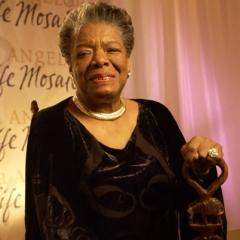
Maya Angelou
Maya Angelou

Maya Angelou was an American author, poet, playwright, actress, and lecturer, known for her profound exploration of race, gender, and culture in her work. Her autobiographical works, including 'I Know Why the Caged Bird Sings,' which detailed her early life of poverty and sexual exploitation, have gained widespread acclaim. more

You May Also Like

“Emotional neglect lays the groundwork for the emotional numbing that helps boys feel better about being cut off. Eruptions of rage in boys are most often deemed normal, explained by the age-old justification for adolescent patriarchal misbehavior, "Boys will be boys." Patriarchy both creates the rage in boys and then contains it for later use, making it a resource to exploit later on as boys become men. As a national product, this rage can be garnered to further imperialism, hatred and oppression of women and men globally. This rage is needed if boys are to become men willing to travel around the world to fight wars without ever demanding that other ways of solving conflict can be found.”

“I draw a line down the middle of a chalkboard, sketching a male symbol on one side and a female symbol on the other. Then I ask just the men: What steps do you guys take, on a daily basis, to prevent yourselves from being sexually assaulted? At first there is a kind of awkward silence as the men try to figure out if they've been asked a trick question. The silence gives way to a smattering of nervous laughter. Occasionally, a young a guy will raise his hand and say, 'I stay out of prison.' This is typically followed by another moment of laughter, before someone finally raises his hand and soberly states, 'Nothing. I don't think about it.' Then I ask women the same question. What steps do you take on a daily basis to prevent yourselves from being sexually assaulted? Women throughout the audience immediately start raising their hands. As the men sit in stunned silence, the women recount safety precautions they take as part of their daily routine. Here are some of their answers: Hold my keys as a potential weapon. Look in the back seat of the car before getting in. Carry a cell phone. Don't go jogging at night. Lock all the windows when I sleep, even on hot summer nights. Be careful not to drink too much. Don't put my drink down and come back to it; make sure I see it being poured. Own a big dog. Carry Mace or pepper spray. Have an unlisted phone number. Have a man's voice on my answering machine. Park in well-lit areas. Don't use parking garages. Don't get on elevators with only one man, or with a group of men. Vary my route home from work. Watch what I wear. Don't use highway rest areas. Use a home alarm system. Don't wear headphones when jogging. Avoid forests or wooded areas, even in the daytime. Don't take a first-floor apartment. Go out in groups. Own a firearm. Meet men on first dates in public places. Make sure to have a car or cab fare. Don't make eye contact with men on the street. Make assertive eye contact with men on the street.”

“I'm going to ask you to remember the prostituted, the homeless, the battered, the raped, the tortured, the murdered, the raped-then-murdered, the murdered-then-raped; and I am going to ask you to remember the photographed, the ones that any or all of the above happened to and it was photographed and now the photographs are for sale in our free countries. I want you to think about those who have been hurt for the fun, the entertainment, the so-called speech of others; those who have been hurt for profit, for the financial benefit of pimps and entrepreneurs. I want you to remember the perpetrator and I am going to ask you to remember the victims: not just tonight but tomorrow and the next day. I want you to find a way to include them -- the perpetrators and the victims -- in what you do, how you think, how you act, what you care about, what your life means to you. Now, I know, in this room, some of you are the women I have been talking about. I know that. People around you may not. I am going to ask you to use every single thing you can remember about what was done to you -- how it was done, where, by whom, when, and, if you know -- why -- to begin to tear male dominance to pieces, to pull it apart, to vandalize it, to destabilize it, to mess it up, to get in its way, to fuck it up. I have to ask you to resist, not to comply, to destroy the power men have over women, to refuse to accept it, to abhor it and to do whatever is necessary despite its cost to you to change it.”

“Some women get erased a little at a time, some all at once. Some reappear. Every woman who appears wrestles with the forces that would have her disappear. She struggles with the forces that would tell her story for her, or write her out of the story, the genealogy, the rights of man, the rule of law. The ability to tell your own story, in words or images, is already a victory, already a revolt.”