Quotessence
Home / Quotes / Quote by Algernon Blackwood

Quote by Algernon Blackwood

“Simpson, the student of divinity, it was who arranged his conclusions probably with the best, though not most scientific, appearance of order. Out there, in the heart of unreclaimed wilderness, they had surely witnessed something crudely and essentially primitive. Something that had survived somehow the advance of humanity had emerged terrifically, betraying a scale of life monstrous and immature. He envisaged it rather as a glimpse into prehistoric ages, when superstitions, gigantic and uncouth, still oppressed the hearts of men: when the forces of nature were still untamed, the Powers that may have haunted a primeval universe not yet withdrawn. To this day he thinks of what he termed years later in a sermon 'savage and formidable Potencies lurking behind the souls of men, not evil perhaps in themselves, yet instinctively hostile to humanity as it exists.' ("The Wendigo")”

Quote by Algernon Blackwood

Work

Monster Mix

Browse quotes and source details for this work. more

Author
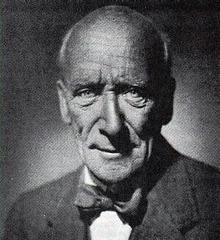
Algernon Blackwood
Algernon Blackwood

Algernon Blackwood was an English writer known for his supernatural and horror fiction. His works often explore the boundaries between human consciousness and the supernatural, enjoying great popularity among readers. more

You May Also Like

“Somewhere along the way, though, I had become timid about life's storms. I had learned to keep my mermaid nature wrapped and hidden. If I had an inner siren, she'd become muzzled in the process of growing up. I'd grown scared, I guess, that if I let my hair out of its tight bun, if I acted on my wild and tempestuous impulses, I would lose control and then be truly lost at sea. This is the story of how I found myself, out there in the storm, and learned my own true nature.”

“What can we do to maintain slowness in the face of those periods of busyness? How can we avoid overload, exhaustion, or even burnout? Perhaps unsurprisingly, my answer is simply to pay attention. I recognize the way I'm inclined to stay up late, the way I will procrastinate at every option- and instead of spiraling into that overwhelming sense of too much, I check in with myself. Why am I feeling this way? What has changed? What is there more of? What is there less of? Become better at recognizing the signs of a looming backslide and pay close attention to the areas of our lives that have the greatest impact, ensuring they never slip too far out of hand. Nicholas Bate refers to this regular checking in as "taking your MEDS" or more specifically, paying attention to: - Mindfulness - Exercise - Diet - Sleep Once I recognize which of these areas has changed, its simpler (not necessarily easier) to recognize the issue and start fixing it. Sometimes the changes aren't in my control, so I need to look for ways of finding slow by creating more opportunities for a moment of deep breathing or paying close attention to whats in front of me. But other times, I've simply lost sight of what works, and its a matter of adding more of these things I've neglected- Mindfulness, simplicity, kindness- and reducing the things that don't serve me well. Above all else, though, I simply go back to my Why. I call to mind the foundation of this life I want. The vivid imaging of a life well lived. The loved ones, the generosity, the adventure, and the world I want to leave behind. And if that feels too big, I call to mind even smaller reminders, like the warm pressure of my kids hands in mine, the wholeness of a good conversation with Ben, the lightness of simply sitting quietly. Our Why is the antidote to overload. Its a call back to the important things and a reminder that we don't need to carry the weight of everything- only those things that are important to us.”

“Changing what we think is always a sticky process, especially when it comes to religion. When new information becomes available, we cringe under an orthodox mindset, particularly when we challenge ideas and beliefs that have been “set in stone” for decades. Thomas Kuhn coined the term paradigm shift to represent this often-painful transition to a new way of thinking in science. He argued that “normal science” represented a consensus of thought among scientists when certain precepts were taken as truths during a given period. He believed that when new information emerges, old ideas clash with new ones, causing a crisis. Once the basic truths are challenged, the crisis ends in either revolution (where the information provides new understanding) or dismissal (where the information is rejected as unsound). The information age that we live in today has likely surprised all of us as members of the LDS Church at one time or another as we encounter new ideas that revise or even contradict our previous understanding of various aspects of Church history and teachings. This experience is similar to that of the Copernican Revolution, which Kuhn uses as one of his primary examples to illustrate how a paradigm shift works. Using similar instruments and comparable celestial data as those before them, Copernicus and others revolutionized the heavens by describing the earth as orbiting the sun (heliocentric) rather than the sun as orbiting the earth (geocentric). Because the geocentric model was so ingrained in the popular (and scientific!) understanding, the new, heliocentric idea was almost impossible to grasp. Paradigm shifts also occur in religion and particularly within Mormonism. One major difference between Kuhn’s theory of paradigm shift and the changes that occur within Mormonism lies in the fact that Mormonism privileges personal revelation, which is something that cannot be institutionally implemented or decreed (unlike a scientific law). Regular members have varying degrees of religious experience, knowledge, and understanding dependent upon many factors (but, importantly, not “faithfulness” or “worthiness,” or so forth). When members are faced with new information, the experience of processing that information may occur only privately. As such, different members can have distinct experiences with and reactions to the new information they receive. This short preface uses the example of seer stones to examine the idea of how new information enters into the lives of average Mormons. We have all seen or know of friends or family who experience a crisis of faith upon learning new information about the Church, its members, and our history. Perhaps there are those reading who have undergone this difficult and unsettling experience. Anyone who has felt overwhelmed at the continual emergence of new information understands the gravity of these massive paradigm shifts and the potentially significant impact they can have on our lives. By looking at just one example, this preface will provide a helpful way to think about new information and how to deal with it when it arrives.”

“[May 1, 1842. Monday.] A.M. at the Temple. At 10 m[arried] J[oseph] to L[ucy] W[alker]. P.M. at President Josephs . . . I have seen 6 brass plates which were found in Adams county . . . President Joseph has translated a portion and says they contain the history of the person with whom they were found and he was a descendant of Ham through the loins of Pharaoh king of Egypt, and that he received his kingdom from the ruler of heaven and earth.”