Quotessence
Home / Quotes / Quote by Leonard Cohen

Quote by Leonard Cohen

Work

Stranger Music: Selected Poems and Songs

This book is a compilation of works that delve into the complexities of human emotions and experiences, particularly focusing on the feeling of being an outsider in the world. more

Author
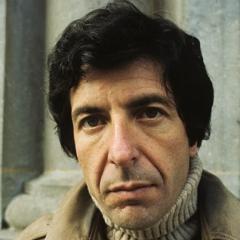
Leonard Cohen
Leonard Cohen

Leonard Cohen, a renowned Canadian singer-songwriter, is celebrated for his profound lyrics and distinctive voice. His musical career spanned over half a century, encompassing a variety of styles from folk to rock and jazz. Cohen's music and poetry have been beloved by fans worldwide, and he is regarded as one of the most influential musicians of the 20th century. more

You May Also Like

“...music does not express this or that particular and definite pleasure, this or that affliction, pain, sorrow, horror, gaiety, merriment, or peace of mind, but joy, pain, sorrow, horror, gaiety, merriment, peace of mind themselves, to a certain extent in the abstract, their essential nature, without any accessories, and so also without the motives for them. Nevertheless, we understand them perfectly in this extracted quintessence. Hence it arises that our imagination is so easily stirred by music, and tries to shape that invisible, yet vividly aroused, spirit-world that speaks to us directly, to clothe it with flesh and bone, and thus to embody it in an analogous example.”

“It's too bad GIFs are silent, because I recorded some original saxophone music to accompany my newest masterpiece. It sounds like ducks quacking on the moon, and if you've got an empty elevator that needs space to be filled, it's now FOR SALE.”

“Dear Rick, I've never thought math was a miracle. The things we study simply are. They were the rules of the universe before we were here to understand them. They operate the world behind the curtain, whether we look behind it or not. The rules are already there. Music is a miracle. It adds something to the world that didn't have to be here. Language is a miracle. Every sentence ever spoken and every song ever sung is a new invention. Not only do they add something new to the world, they transmit thoughts and emotions that would otherwise be locked within one person. I hear a song and feel something a composer felt 200 years ago. I read your letter and hear your voice saying the words. I feel you in the room with me. That's the miracle.”

“The music of a civilization has far-reaching consequences on consciousness and, thus, influences the basic nature of a society. Music and its rhythms divert and compel the awareness, describing the limits within which a consciousness, thus fascinated, may operate. Control the music, then, and you own a powerful tool with which to shape the society. ―The Dosadi Analysis, BuSab Documents”

“As any painter, writer, or composer knows, artworks arise from the tension between their physical materials and the thought or spirit that shapes them from within. Though they require some outward, physical element, they cease to function as art when they are reduced to their objectlike, artifactual element. This definitive tension underlies art’s varied social uses and explains how it came to be celebrated on the one hand as an expression of the highest spiritual achievements of humanity and, on the other, criticized as merely another precious object—a trapping of wealth, privilege, and social exclusion. Even in the heyday of classical music, there was always a gap between the philosophical claims for music and social practice”