Quotessence
Home / Quotes / Quote by Audre Lorde

Quote by Audre Lorde

“We have been raised to fear the yes within ourselves, our deepest cravings. For the demands of our released expectations lead us inevitably into actions which will help bring our lives into accordance with our needs, our knowledge, our desires. And the fear of our deepest cravings keeps them suspect, keeps us docile and loyal and obedient, and leads us to settle for or accept many facets of our oppression as women.”

Quote by Audre Lorde

Work

Uses of the Erotic: The Erotic As Power

This book delves into the significance of the erotic in various aspects of human life, examining its influence on power dynamics and its manifestations in different cultures and historical periods. more

Author
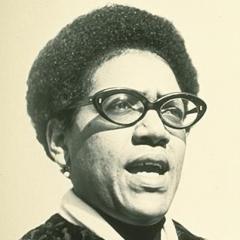
Audre Lorde
Audre Lorde

Audre Lorde, an American writer, poet, and speaker, was born on February 18, 1934, and passed away on November 17, 1992. Known for her profound insights into race, gender, and sexual orientation, her work encompasses poetry, prose, and novels, which have had a profound impact on contemporary literature and social movements. more

You May Also Like

“Objectification is a critical reason why an abuser tends to get worse over time. As his conscience adapts to one level of cruelty—or violence—he builds to the next. By depersonalizing his partner, the abuser protects himself from the natural human emotions of guilt and empathy, so that he can sleep at night with a clear conscience. He distances himself so far from her humanity that her feelings no longer count, or simply cease to exist. These walls tend to grow over time, so that after a few years in a relationship my clients can reach a point where they feel no more guilt over degrading or threatening their partners than you or I would feel after angrily kicking a stone in the driveway.”

“ABUSIVE MEN COME in every personality type, arise from good childhoods and bad ones, are macho men or gentle, “liberated” men. No psychological test can distinguish an abusive man from a respectful one. Abusiveness is not a product of a man’s emotional injuries or of deficits in his skills. In reality, abuse springs from a man’s early cultural training, his key male role models, and his peer influences. In other words, abuse is a problem of values, not of psychology. When someone challenges an abuser’s attitudes and beliefs, he tends to reveal the contemptuous and insulting personality that normally stays hidden, reserved for private attacks on his partner. An abuser tries to keep everybody—his partner, his therapist, his friends and relatives—focused on how he feels, so that they won’t focus on how he thinks, perhaps because on some level he is aware that if you grasp the true nature of his problem, you will begin to escape his domination.”

“The confusion of love with abuse is what allows abusers who kill their partners to make the absurd claim that they were driven by the depths of their loving feelings. The news media regrettably often accept the aggressors’ view of these acts, describing them as “crimes of passion.” But what could more thoroughly prove that a man did not love his partner? If a mother were to kill one of her children, would we ever accept the claim that she did it because she was overwhelmed by how much she cared? Not for an instant. Nor should we. Genuine love means respecting the humanity of the other person, wanting what is best for him or her, and supporting the other person’s self-esteem and independence. This kind of love is incompatible with abuse and coercion.”

“I am often asked whether physical aggression by women toward men, such as a slap in the face, is abuse. The answer is: “It depends.” Men typically experience women’s shoves or slaps as annoying and infuriating rather than intimidating, so the long-term emotional effects are less damaging. It is rare to find a man who has gradually lost his freedom or self-esteem because of a woman’s aggressiveness.”