Quotessence
Home / Quotes / Quote by Rachel Carson

Quote by Rachel Carson

“I sincerely believe that for the child, and for the parent seeking to guide him, it is not half so important to know as to feel. If facts are the seeds that later produce knowledge and wisdom, then the emotions and the impressions of the senses are the fertile soil in which the seeds must grow. The years of early childhood are the time to prepare the soil. Once the emotions have been aroused - a sense of the beautiful, the excitement of the new and unknown, a feeling of sympathy, pity, admiration or love - then we wish for knowledge about the object of our emotional response. Once found, it has lasting meaning. It is more important to pave the way for the child to want to know than to put him on a diet of facts he is not ready to assimilate.”

Quote by Rachel Carson

Work

The Sense of Wonder

This work is a reflective essay that delves into the significance of curiosity and the appreciation of the natural world. The author discusses the impact of fostering a sense of wonder on personal growth and the cultivation of a deeper connection with nature. more

Author
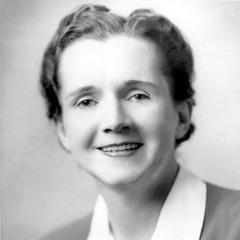
Rachel Carson
Rachel Carson

Rachel Carson, an American marine biologist, was born on May 27, 1907, and passed away on April 14, 1964. She is renowned for her in-depth research on marine ecosystems and her advocacy for environmental issues. Carson's book 'Silent Spring' revealed the destructive impact of pesticides on the environment, which had a profound impact on the environmental movement. more

You May Also Like

“Life isn’t about being strong or pretending we are strong to impress others. It takes courage to be authentic with our feelings and acknowledge that real strength comes from recognizing our moments of weakness.”

“Never May the Fruit Be Plucked” Never, never may the fruit be plucked from the bough And gathered into barrels. He that would eat of love must eat it where it hangs. Though the branches bend like reeds, Though the ripe fruit splash in the grass or wrinkle on the tree, He that would eat of love may bear away with him Only what his belly can hold, Nothing in the apron, Nothing in the pockets. Never, never may the fruit be gathered from the bough And harvested in barrels. The winter of love is a cellar of empty bins, In an orchard soft with rot.”

“The doctors found one electrode contact that greatly relieved the woman's symptoms. But the unexpected happened when the electric current passed through one of the four contact sites on the patient's left side, precisely two millimeters below the contact that improved her condition. The patient stopped her ongoing conversation quite abruptly, cast her eyes down and to her right side, then leaned slightly to the right and her emotional expression became one of sadness. After a few seconds she suddenly began to cry. Tears flowed and her entire demeanor was one of profound misery. Soon she was sobbing. As this display continued she began talking about how deeply sad she felt, how she had no energies left to go on living in this manner, how hopeless and exhausted she was. [ . . . ] The physician in charge of the treatment realized that this unusual event was due to the current and aborted the procedure. About ninety seconds after the current was interrupted the patient's behavior returned to normal. [ . . . ] Why would this patient's brain evoke the kind of thoughts that normally cause sadness considering that the emotion and feeling were unmotivated by the appropriate stimuli? The answer has to do with the dependence of feeling on emotion and the intriguing ways of one's memory. When the emotion sadness is deployed, feelings of sadness instantly follow. In short order, the brain also brings forth the kind of thoughts that normally cause the emotion sadness and feelings of sadness. This is because associative learning has linked emotions with thoughts in a rich two-way network. Certain thoughts evoke certain emotions and vice-versa.”