Quotessence
Home / Quotes / Quote by John Buchan

Quote by John Buchan

Work

Castle Gay

Browse quotes and source details for this work. more
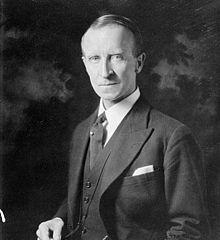
Author

John Buchan
John Buchan

John Buchan, born on August 26, 1875, and died on February 11, 1940, was a former Governor General of Canada and a renowned novelist and historian. He is best known for his historical novels and adventure stories, which have won the hearts of readers worldwide. more

You May Also Like

“Books are better than television, the internet, or the computer for educating and maintaining freedom. Books matter because they state ideas and then attempt to thoroughly prove them. They have an advantage precisely because they slow down the process, allowing the reader to internalize, respond, react and transform. The ideas in books matter because time is taken to establish truth, and because the reader must take the time to consider each idea and either accept it or, if he rejects it, to think through sound reasons for doing so. A nation of people who write and read is a nation with the attention span to earn an education and free society if they choose.”

“If you make art, people will talk about it. Some of the things they say will be nice, some won’t. You’ll already have made that art, and when they’re talking about the last thing you did, you should already be making the next thing. If bad reviews (of whatever kind) upset you, just don’t read them. It’s not like you’ve signed an agreement with the person buying the book to exchange your book for their opinion. Do whatever you have to do to keep making art. I know people who love bad reviews, because it means they’ve made something happen and made people talk; I know people who have never read any of their reviews. It’s their call. You get on with making art.”

“People have been carping in this way for many centuries. Socrates feared that the act of writing would “create forgetfulness in the learners’ souls.” The sixteenth-century scientist Conrad Gessner worried that the printing press would facilitate an “always on” environment. In the eighteenth century, men complained that newspapers would be intellectually and morally isolating, and that the rise of the novel would make it difficult for people—specifically women—to differentiate between fiction and fact. We worried that radio would drive children to distraction, and later that TV would erode the careful attention required by radio. In 1985, Neil Postman observed that the American desire for constant entertainment had become toxic, that television had ushered in a “vast descent into triviality.”

“The resource of generational history is accorded little attention our society, which seems ever more obsessed with making “new” and “better” synonymous. From my family I became aware of the importance of passing along wisdom from one generation to the next. Yet despite the increasing proliferation of digital recording and other communication technologies, we’re passing on less knowledge today than our parents did through the oral tradition alone. We’re drowning in photographs and videos, capturing every mundane moment of our birthdays, holidays, and vacations. Yet these can be no more than pleasant distraction, only scratching the surface of our real relationships.”