Quotessence
Home / Quotes / Quote by Lev Shestov

Quote by Lev Shestov

“St. Augustine hated the Stoics, Dostoevsky hated the Russian Liberals. At first sight this seems a quite inexplicable peculiarity. Both were convinced Christians, both spoke so much of love, and suddenly - such hate! And against whom? Against the Stoics, who preached self-abnegation, who esteemed virtue above all things in the world, and against the Liberals who also exalted virtue above all things! But the fact remains: Dostoevsky spoke in rage of Stassyulevitch and Gradovsky; Augustine could not be calm when he spoke the names of those pre-Stoic Stoics, Regulus and Mutius Scaevola, and even Socrates, the idol of the ancient world, appeared to him a bogey. Obviously Augustine and Dostoevsky were terrified and appalled by the mere thought of the possibility of such men as Scaevola and Gradovsky - men capable of loving virtue for its own sake, of seeing virtue as an end in itself. Dostoevsky says openly in the Diary of a Writer that the only idea capable of inspiring a man is that of the immortality of the soul.”

Quote by Lev Shestov

Work

In Job's Balances: On the Sources of the Eternal Truths

Browse quotes and source details for this work. more

Author
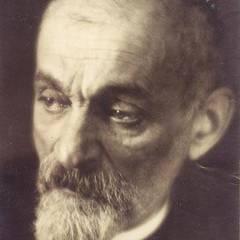
Lev Shestov
Lev Shestov

Lev Shestov (February 13, 1866 - November 19, 1938) was a prominent Russian philosopher of the 20th century, known for his profound contributions to existentialism and religious philosophy. more

You May Also Like

“But being the mirrors for each other's souls has a cost: by the time they part from each other, the individuals in the mating pair have become indistinguishable. Before their merger, they each yearned for the other; as they part, they part from the self. The very quality that attracted them to each other is also, inevitably, destroyed in their union.”

“Существует забавная старинная теория, что у человека могут быть две души - одна внешняя, которая служит ему постоянно, и другая внутренняя, которая пробуждается изредка, но, проснувшись, живет интенсивно и ярко. Подчиняясь первой, человек бреется, голосует, платит налоги, содержит семью, покупает в рассрочку мебель и вообще ведет себя нормально. Но стоит внутренней душе взять верх, и в один миг тот же человек начинает изливать на свою спутницу жизни поток яростного отвращения; не успеете вы оглянуться, как он изменяет свои политические взгляды, наносит смертельное оскорбление своему лучшему другу, удаляется в монастырь или дансинг, исчезает, вешается, или - пишет стихи и песни, или целует жену, когда она его о том не просила, или отдает все свои сбережения на борьбу с каким-нибудь микробом. Потом внешняя душа возвращается, и перед вами снова наш уравновешенный, спокойный гражданин. То, что было, это всего лишь бунт Индивидуума против Порядка; надо было перетряхнуть атомы человека, чтобы дать им снова осесть на положенных местах".”

“This was how it was with travel: one city gives you gifts, another robs you. One gives you the heart’s affections, the other destroys your soul. Cities and countries are as alive and feeling, as fickle and uncertain as people. Their degrees of love and devotion are as varying as with any human relation. Just as one is good, another is bad.”

“Sometimes callers from a distance invade my solitude, and it is on these occasions that I realize how absolutely alone each individual is, and how far away from his neighbour; and while they talk (generally about babies, past, present, and to come), I fall to wondering at the vast and impassable distance that separates one's own soul from the soul of the person sitting in the next chair.”