Quotessence
Home / Authors / Lev Shestov
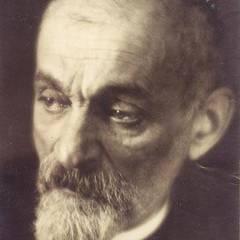
Lev Shestov

Lev Shestov Quotes

Philosopher

Filter quotes by topic

Famous Lev Shestov Quotes

“St. Augustine hated the Stoics, Dostoevsky hated the Russian Liberals. At first sight this seems a quite inexplicable peculiarity. Both were convinced Christians, both spoke so much of love, and suddenly - such hate! And against whom? Against the Stoics, who preached self-abnegation, who esteemed virtue above all things in the world, and against the Liberals who also exalted virtue above all things! But the fact remains: Dostoevsky spoke in rage of Stassyulevitch and Gradovsky; Augustine could not be calm when he spoke the names of those pre-Stoic Stoics, Regulus and Mutius Scaevola, and even Socrates, the idol of the ancient world, appeared to him a bogey. Obviously Augustine and Dostoevsky were terrified and appalled by the mere thought of the possibility of such men as Scaevola and Gradovsky - men capable of loving virtue for its own sake, of seeing virtue as an end in itself. Dostoevsky says openly in the Diary of a Writer that the only idea capable of inspiring a man is that of the immortality of the soul.”

“A writer works himself up to a pitch of ecstasy, otherwise he does not take up his pen. But ecstasy is not so easily distinguished from other kinds of excitement. And as a writer is always in haste to write, he has rarely the patience to wait, but at the first promptings of animation begins to pour himself forth. So in the name of ecstasy we are offered such quantities of banal, by no means ecstatic effusions. Particularly easy it is to confound with ecstasy that very common sort of spring-time liveliness which in our language is well-named calf-rapture. And calf-rapture is much more acceptable to the public than true inspiration or genuine transport. It is easier, more familiar.”

“But it will be asked: What is the force and power of the blessings and curses of men, even if these men be such giants as Plato and Aristotle? Does truth become more true because Aristotle blesses it, or does it become error because Plato curses it? Is it given men to judge the truths, to decide the fate of the truths? On the contrary, it is the truths which judge men and decide their fate and not men who rule over the truths. Men, the great as well as the small, are born and die, appear and disappear - but the truth remains. When no one had as yet begun to "think" or to "search," the truths which later revealed themselves to men already existed. And when men will have finally disappeared from the face of the earth, or will have lost the faculty of thinking, the truths will not suffer therefrom.”

“People who read much must always keep it in mind that life is one thing, literature another. Not that authors invariably lie. I declare that there are writers who rarely and most reluctantly lie. But one must know how to read, and that isn't easy. Out of a hundred book-readers ninety-nine have no idea what they are reading about. It is a common belief, for example, that any writer who sings of suffering must be ready at all times to open his arms to the weary and heavy-laden. This is what his readers feel when they read his books. Then when they approach him with their woes, and find that he runs away without looking back at them, they are filled with indignation and talk of the discrepancy between word and deed. Whereas the fact is, the singer has more than enough woes of his own, and he sings them because he can't get rid of them. L'uccello canto, nella gabbia, non di gioia ma di rabbia, says the Italian proverb: "The bird sings in the cage, not from joy but from rage." It is impossible to love sufferers, particularly hopeless sufferers, and whoever says otherwise is a deliberate liar.”

“A poet is, on the one hand, among the elect; on the other hand, he is one of the most insignificant of mortals. Hence we can draw a very consoling conclusion: the most insignificant of men are not altogether so worthless as we imagine. They may not be fit to occupy government positions or professorial chairs, but they are often extremely at home on Parnassus and such high places. Apollo rewards vice, and virtue, as everybody knows, is so satisfied with herself she needs no reward. Then why do the pessimists lament? Leibnitz was quite right: we live in the best possible of worlds. I would even suggest that we leave out the modification "possible.”

“Moral people are the most revengeful of mankind, they employ their morality as the best and most subtle weapon of vengeance. They are not satisfied with simply despising and condemning their neighbour themselves, they want the condemnation to be universal and supreme: that is, that all men should rise as one against the condemned, and that even the offender's own conscience shall be against him. Then only are they fully satisfied and reassured. Nothing on earth but morality could lead to such wonderful results.”

“It is necessary to choose: if you wish to be an empiricist, you must abandon the hope of founding scientific knowledge on a solid and certain basis; if you wish to have a solidly established science, you must place it under the protection of the idea of Necessity and, in addition, recognize this idea as primordial, original, having no beginning and consequently no end - that is to say, you must endow it with the superiorities and qualities that men generally accord to the S”

“It is obvious that he has set himself an impossible task; slow and gradual transformations are possible, they even happen quite frequently, but they do not lead us to a new life; they only take us from one old life to another old life. The new life always makes itself known abruptly, without any approach or preparation, and it keeps its strange enigmatical character in the midst of events whose course has been determined by the old laws.”

“Although we had had no precise exponents of realism, yet after Pushkin it was impossible for a Russian writer to depart too far from actuality. Even those who did not know what to do with "real life" had to cope with it as best they could. Hence, in order that the picture of life should not prove too depressing, the writer must provide himself in due season with a philosophy.”