Quotessence
Home / Quotes / Quote by Louisa May Alcott

Quote by Louisa May Alcott

“I'm a crotchety old thing, and always shall be, but I'm willing to own that you are right, only it's easier for me to risk my life for a person than to be pleasant to him when I don't feel like it. It's a great misfortune to have such strong likes and dislikes, isn't it?”

Quote by Louisa May Alcott

Work

Little Women

Set in the mid-19th century, this enduring tale follows the adventures and challenges of Meg, Jo, Beth, and Amy March, four sisters from a modest New England family. The narrative explores themes of love, loss, and the pursuit of individual dreams amidst the backdrop of a turbulent period in American history. more

Author

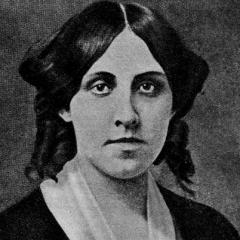
Louisa May Alcott
Louisa May Alcott

American novelist, famous for works such as 'Little Women'. Born on November 29, 1832, and died on March 6, 1888. more

You May Also Like

“When ideas are detached from the media used to transmit them, they are also cut off from the historical circumstances that shape them, and it becomes difficult to perceive the changing context within which they must be viewed.”

“Where religious doctrines exist, for example, they can only become real to the extent that there exist concrete semiotic practices by which they can be enacted, embodied, experienced, and transmitted. But those practices will be subject to such factors as logistics, aesthetics, economics, or prior history, that are independent of the logical, political, or emotional demands of and constraints on doctrine itself. [...] Even textual forms as relatively autonomous, portable, and durable as written scriptures depend for their persistence and power on social dynamics surrounding contextualization and entextualization.”

“There are substantial issues that remain, however, related to direction, hierarchy, and paternalism in missional mentalities. The heart and the willingness behind going are to be applauded. Jesus modeled an incarnational gospel and contextual approaches are to be valued over attractional models like those found in the megachurch movement. Concerns abound, though, in the shadow of the colonial legacy. How does one reclaim or reform a concept that has been so thoroughly corrupted and has taken on so much baggage? Is repentance enough? Can the form actually be redeemed and repurposed?”

“Also, in Joel 2:16, it says, “Gather the people, sanctify the congregation, assemble the aged, gather the children…” This was a command meant to gather the people in Zion to fast and repent. It would not make sense for the women of the “congregation” to solely be sanctified through childbirth, because women who were still pregnant, had babies that were still developing, or were unmarried would not be able to be “sanctified,” since it is highly improbable for a woman to immediately give birth at the beginning of the assembly. If women had to be sanctified through childbirth, then the entire “congregation” would not be sanctified, as was commanded, because not all women could give birth right when the assembly began.”