Quotessence
Home / Quotes / Quote by Arthur Koestler

Quote by Arthur Koestler

“The pressure of the environment cramps art as it cramps behaviour. One may challenge this environment, but one has to pay for it, and the price is neurotic guilt. There never was an intelligentsia without a guilt complex; it is the income tax one has to pay for wanting to make others richer.”

Quote by Arthur Koestler

Work

The Yogi and the Commissar, and Other Essays

Browse quotes and source details for this work. more

Author
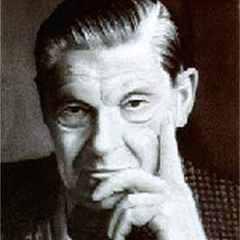
Arthur Koestler
Arthur Koestler

Arthur Koestler was a Hungarian-British author, journalist, and political activist. He is renowned for his novel 'Darkness at Noon' and his involvement in the Spanish Civil War. Koestler's writings frequently delved into the themes of totalitarianism and the individual's resistance to oppression. more

You May Also Like

“Nor were the intellectuals of the 1920s a vanguard of a new outlook, as they themselves supposed, but the exhausted rearguard of Victorian romanticism. They sought refuge from an industrialised and ugly world. Some, like Virginia Woolf, found it in polishing up an exquisite sensibility. Others, like her husband Leonard Woolf and of course Gilbert Murray, found escape in designing an ideal society...It was a sheltered world, this of the intelligentsia of the 1920s, its inhabitants mostly shielded by private means from crude personal reminders of the outside struggle for survival. They circulated at leisure from country house to country cottage...back again to Bloomsbury or one of the ancient universities; convinced that they carried in their luggage the soul of civilisation. The memoirs of the epoch are fragrant with cultured weekends - witty chat on the lawn and brilliant profundity at the dining table. It was a circle of flimsy and precious people, of whom Lady Ottoline Morrell was perhaps the manliest. And so, while not all intellectuals were active pacifists or internationalists, they were generally more concerned with classical French and Greek culture - 'the good life' - than with 'Philistine' matters like industrial and strategic power.”

“On the edge conversations with my son. My son (the one who can't easily decide) asked me in a positive note, "Mommy how can you be fearless and decide easily." To which I carefully replied: "It's not that I am without fear. In fact, after having you - I have a lot. Nothing is easy when you don't really know what you want. But if you truly do want things to happen, your fears will be overshadowed by making your dreams come true. Just make one step at a time and with each step the shadows of doubt and fear will fall behind you." "But Mommy, how do you know which decision to make?" "I don't always know. This or that, no matter which side I take, no one really knows what awaits so I take whatever I feel is right for me and the people who will be directly affected by my decisions. Nevertheless, I have guidelines that I live by: BTS. Believe in luck but work hard, Trust yourself that you can handle anything and Show respect to the people who will be directly affected by your choices.”

“In addition, of course, they would be taken to a bath and in the bath vestibule they would be ordered to leave their leather coats, their Romanov sheepskin coats, their woolen sweaters, their suits of fine wool, their felt cloaks, their leather boots, their felt boots (for, after all, these were no illiterate peasants this time, but the Party elite—editors of newspapers, directors of trusts and factories, responsible officials in the provincial Party committees, professors of political economy, and, by the beginning of the thirties, all of them understood what good merchandise was). "And who is going to guard them?" the newcomers asked skeptically. "Oh, come on now, who needs your things?" The bath personnel acted offended. "Go on in and don't worry." And they did go in. And the exit was through a different door, and after passing through it, they received back cotton breeches, field shirts, camp quilted jackets without pockets, and pigskin shoes. (Oh, this was no small thing! This was farewell to your former life—to your titles, your positions, and your arrogance!) "Where are our things?" they cried. "Your things you left at home!" some chief or other bellowed at them. "In camp nothing belongs to you. Here in camp, we have communism! Forward march, leader!" And if it was "communism," then what was there for them to object to? That is what they had dedicated their lives to.”

“Para Mary, o problema era claro: ali estava uma possibilidade de trabalho, a qual devia ser aproveitada sem hesitação; Feld pagava bem e a atividade televisiva proporcionaria enorme prestígio; todas as semanas, no final do programa de Coelho Hentman, o nome de Chuck, como um dos escritores, surgiria na tela, para todo o mundo não-comuna. Mary sentiria orgulho, e aí residia o fator-chave: o trabalho do marido seria notavelmente criativo. E para Mary, a criatividade era o abre-te-sésamo da vida; o trabalho para a CIA, programando simulacros para propaganda que tagarelavam mensagens para africanos, latino-americanos e asiáticos incultos, não dava asas à criatividade; as mensagens costumavam ser as mesmas e, de qualquer maneira, a CIA era dona de má reputação nos círculos liberais, vanguardistas e sofisticados frequentados por Mary.”