Quotessence
Home / Quotes / Quote by Frederick William Faber

Quote by Frederick William Faber

“I reckon failure to be the most universal unhappiness on earth. Almost everybody and everything are failures—failures in their own estimation, even if they are not so in the estimation of others. Those optimists who always think themselves successful are few in number, and they for the most part fail in this at least, namely, that they cannot persuade the rest of the world of their success.”

Quote by Frederick William Faber

Work

The Precious Blood: The Price of Our Salvation

Browse quotes and source details for this work. more

Author
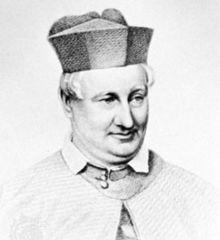
Frederick William Faber

Frederick William Faber, a British writer, was born on June 28, 1814, and died on September 26, 1863. Known for his poetry and religious works, Faber's writings were highly appreciated by Victorian readers. more

You May Also Like

“С этим гипотетическим романистом надо как с богом: поступать так, будто его нет, ибо если он существует, это в лучшем случае скверный писака, не заслуживающий ни уважения, ни послушания. Изменить ход истории никогда не поздно. Вполне возможно, что воображаемый романист еще ничего не решил. Возможно, финал в руках его персонажа, а персонаж – это я.”

“Unconditional praise of life and happiness. Existenz uber alles! This fierce optimism, this idealism, which sees the worst catastrophes, the worst corruption as having a right to claim mitigating circumstances. The critical spirit is not dead, contrary to the opinion of the Enlightenment nostalgics. It has simply metabolized into all the ironic procedures, all the sardonic artifices in which we play, smugly, on our own incredulity. 'The Last Man, talking to himself while shaking his head incredulously,' said Nietzsche. Excess today, our contemporary 'hubris', is the excess of universal hybridization - like the fluorescent rabbit that is a cross between a rabbit and an octopus - and of making everything copulate with itself like the crepidula fornicata.”

“Being secondarily pessimistic - believing that the good always ends up going bad. And secondarily optimistic - believing that the system is best placed to put an end to itself. After the three great revolutions - Galileo and the end of geocentrism, Darwin and the theory of evolution, Freud and the 'discovery' of the Unconscious - our contemporary revolution is that of the virtual and of information technology, and it distances man increasingly from sovereignty over the natural world, of which he was the centre in the days when the earth did not yet revolve around the sun, in the days when he was not yet descended from the apes. He is becoming increasingly eccentric today - a peripheral, artificial extension of his own model.”