Quotessence
Home / Quotes / Quote by Samuel R. Delany

Quote by Samuel R. Delany

Work

Tales of Nevèrÿon

This book is a compilation of interconnected tales that delve into the complexities of a fantastical realm, offering readers a rich tapestry of characters and narratives that reflect upon the nature of authority, self-discovery, and the struggle for personal freedom. more
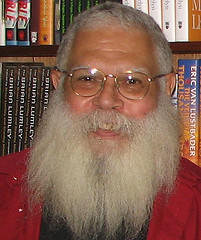
Author

Samuel R. Delany
Samuel R. Delany

Samuel R. Delany is an American author renowned for his science fiction and fantasy novels. His works are celebrated for their complex narrative structures, profound social commentary, and exploration of gender. Born on April 1, 1942, Delany's writing career spans several decades, and he has had a significant impact on contemporary literature. more

You May Also Like

“Man is a fantastic animal; he was born of fantasy, he is the son of "the mad woman of the house." And universal history is the gigantic and thousand-year effort to go on putting order into that huge, disorderly, anti-animal fantasy. What we call reason is no more than fantasy put into shape. Is there anything in the world more fantastic than that which is the most rational? Is there anything more fantastic than the mathematical point, and the infinite line, and, in general, all mathematics and all physics? Is there a more fantastic fancy than what we call "justice" and the other thing that we call "happiness"?”

“In asking for a relic of Descartes, the chevalier de Terlon was standing at the crossroads of the ancient and modern. He was applying to a modern thinker - the inventor of analytic geometry, no less - a primitive tradition that extends back not only to the institutionalization of Christianity in the fourth century, when Christians first broke into the tombs of saints to gather relics, but farther still, beyond the horizon of recorded history. The request is all the stranger for the fact that the man whose remains were treated in this quasisaintlike way would go down in history as the progenitor of materialism, rationalism, and a whole tradition that looked on such veneration as nonsense.”