“You all talk like somebody else made these laws and Pharaoh don't know nothing about 'em. He makes 'em his own self and he's glad when we come tell him they hurt. Why, that's a whole lot of pleasure to him, to be making up laws all the time and to have a crowd like us around handy to pass all his mean ones on. Why, he's got a law about everything under the sun! Next thing you know, he'll be saying cats can't have kittens. He figures that it makes a big man out of him to be passing and passing laws and rules. He thinks that makes him look more like a king.”
Quote by Zora Neale Hurston
Work
Moses, Man of the Mountain
Browse quotes and source details for this work. more
Author
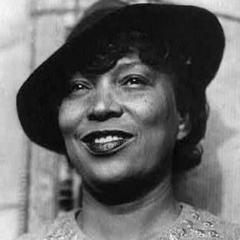
Zora Neale Hurston
Zora Neale Hurston (1891-1960) was an American anthropologist, folklorist, and novelist who played a pivotal role in the Harlem Renaissance. Born in Alabama and raised in Eatonville, Florida, she became the first African American student at Barnard College, Columbia University, studying under Franz Boas. Hurston is best known for her novel "Their Eyes Were Watching God," now considered a classic of American literature. She conducted extensive anthropological fieldwork in the American South and Caribbean, preserving African American folk traditions. Though largely forgotten after her death, her work was revived by Alice Walker in the 1970s, establishing her as a foundational figure in African American literature and anthropology. more
You May Also Like
Source: Cleopatra: Egypt's Last and Greatest Queen
Source: The Importance Of Being Seven
Source: The Conscience of a Right-Winger
Source: The quest for absolute zero: The meaning of low temperature physics
Source: Emotional Intelligence: Resilience
Source: Emotional Intelligence: Resilience
Source: How Resilience Works
“Los dulces sueños nacen del sudor y valor - sudor lo hace dulce, el valor lo hace realidad.”
Source: Generacion Justicia: Día de Los Vivos, Abigitano 2
Source: Generacion Justicia: Día de Los Vivos, Abigitano 2
“Tu sueño es tu deber, tu sueño es tu derecho.”
Source: Generacion Justicia: Día de Los Vivos, Abigitano 2