Quotessence
Home / Quotes / Quote by Shirley Hazzard

Quote by Shirley Hazzard

“... although the sufferings of children are the worst, being inextinguishable--children themselves seldom have a proper sense of their own tragedy, discounting and keeping hidden the true horrors of their short lives, humbly imagining real calamity to be some prestigious drama of the grown-up world. [p. 13]”

Quote by Shirley Hazzard

Work

The Bay of Noon

This novel, set in the 1940s, delves into the lives of its characters in a coastal town. It intertwines romantic relationships with the broader social fabric of the community, offering a nuanced portrayal of personal and collective experiences during that era. more

Author

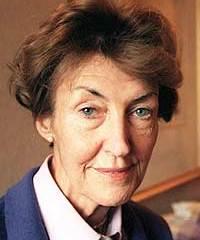
Shirley Hazzard
Shirley Hazzard

Shirley Hazzard was a distinguished American author of New Zealand birth, known for her nuanced psychological portraits and profound historical settings. Her works often explore the relationship between individuals and history, as well as the impact of war and conflict on the human psyche. Hazzard's literary career began in the 1950s, with her short story collection 'The Bay of Noon' published in 1954. more

You May Also Like

“We did not think of the great open plains, the beautiful rolling hills and the winding streams with tangled growth, as 'wild'. Only to the white man was nature a 'wilderness' and only to him was the land 'infested' with 'wild' animals and 'savage' people. To us it was home. Earth was beautiful and we were surrounded with the blessings of the Great Mystery." - Chief Standing River of the Lakota”

“As children get older, this incidental outdoor activity--say, while waiting to be called to eat--becomes less bumptious, physically and entails more loitering with others, sizing people up, flirting, talking, pushing, shoving and horseplay. Adolescents are always being criticized for this kind of loitering, but they can hardly grow up without it. The trouble comes when it is done not within society, but as a form of outlaw life. The requisite for any of these varieties of incidental play is not pretentious equipment of any sort, but rather space at an immediately convenient and interesting place. The play gets crowded out if sidewalks are too narrow relative to the total demands put on them. It is especially crowded out if the sidewalks also lack minor irregularities in building line. An immense amount of both loitering and play goes on in shallow sidewalk niches out of the line of moving pedestrian feet.”