Quotessence
Home / Quotes / Quote by Johan Norberg

Quote by Johan Norberg

“So it was not superior thinkers, inventors or businesses that made Europe rich, but the fact that European elites were less successful in obstructing them... This is somewhat similar to our era of globalization. More countries, in more places, now have access to the sum of humanity's knowledge, and are open to the best innovations from other places... If progress is blocked in one place, many others will continue humanity's journey. (217-218)”

Quote by Johan Norberg

Work

Progress - Ten Reasons to Look Forward to the Future

Browse quotes and source details for this work. more

Author
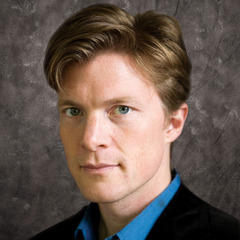
Johan Norberg
Johan Norberg

Johan Norberg is a Swedish author known for his in-depth research on free markets, globalization, and individual freedom. His work often emphasizes how free markets promote economic growth and social progress. more

You May Also Like

“the strongest principle of growth lies in human choice. The sons of Judah have to choose that God may again choose them. The Messianic time is the time when Israel shall will the planting of the national ensign. The Nile overflowed and rushed onward: the Egyptian could not choose the overflow, but he chose to work and make channels for the fructifying waters, and Egypt became the land of corn. Shall man, whose soul is set in the royalty of discernment and resolve, deny his rank and say, I am an onlooker, ask no choice or purpose of me? That is the blasphemy of this time. The divine principle of our race is action, choice, resolved memory. Let us contradict the blasphemy, and help to will our own better future and the better future of the world--not renounce our higher gift and say, 'Let us be as if we were not among the populations;' but choose our full heritage, claim the brotherhood of our nation, and carry into it a new brotherhood with the nations of the Gentiles. The vision is there; it will be fulfilled.”

“Progress does not mean that we will ever reach a paradisiacal end state where everything will be optimal for everyone everywhere. New problems will arise, and they will have to be solved, however imperfectly, by future generations. As such, the world will never be a perfect place. After all, the beings who inhabit it are themselves imperfect. As the German philosopher and advocate of gradual human progress Immanuel Kant (1724-1804) observed in 1784, “From such crooked timber as humankind is made of nothing entirely straight can be made.”

“It changed the life of mankind more radically than the printing press. It created suburbs and a hundred other dependencies—sexual and economic and narcotic—upon the automobile. And the automobile paved the way for more profound – more inward- inner dependencies upon Television and then robots, and finally the ultimate and predictable conclusion of it all: the perfection of the chemistry of the mind…It all began, I suppose, with learning to build fires—to warm the cave and keep the predators out. And it ended with time-release Valium.”

“In order to build a truly wise society devoid of any kind of existential crisis, it is imperative that the individuals foster a healthy integration between cognition and behavior. When cognition and behavior are not in sync, no civilization can progress in peace and harmony. Without this fundamental integration between cognition and behavior, the so-called “civilization” only miserizes itself by always confusing the acquirement of instant gratifications to be peace and happiness.”