Quotessence
Home / Quotes / Quote by Ransom Riggs

Quote by Ransom Riggs

“Let me see: There's Miss Garnnett in Ireland, in June of 1770; Miss Nightjar in Swansea on April 3, 1901; Miss Avocet and Miss Bunting together in Derbyshire on Saint Swithin's Day of 1867; Miss Treecreeper I don't remmeber where exactly-- oh, and dear Miss Finch.”

Quote by Ransom Riggs

Work

Miss Peregrine's Home for Peculiar Children

This novel is a blend of fantasy and historical fiction, following the journey of a young boy who uncovers a hidden world of peculiar children with unique talents. Set during World War II, the story delves into the lives of these children and their mysterious guardian, Miss Peregrine, as they face danger and uncover secrets from the past. more

Author
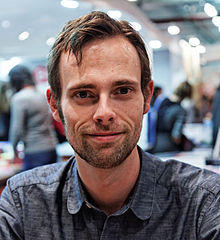
Ransom Riggs
Ransom Riggs

Ransom Riggs is an American writer known for his unique literary style and modern interpretations of classic stories. Born in 1980, he graduated from Stanford University with a major in English literature. Riggs' works often blend fantasy, suspense, and literary elements, enjoying great popularity among readers. more

You May Also Like

“If a man loves a girl who is in the first place young and inexperienced; who in the second place is educated with a background of caveman tradition, a middle-ground of poetry and romance, and a foreground of unspoken hope and interest all centering upon the one Event; and who has, furthermore, absolutely no other hope or interest worthy of the name - why, it is a comparatively easy manner to sweep her off her feet with a dashing attack.”

“What is a “woman”? Who gets to be one? Who gets to decide who “counts”? In our quest for equality, should feminists strive for the right to embody even the toxic aspects of masculinity, or should we focus on dismantling it before reaching for equality at all? Why should women who have traditionally been underserved or exploited by mainstream feminism (women of colour, trans women, sex workers) have that label foisted upon them? What do we do with the uncomfortable truth that many women’s rights pioneers were explicitly, actively racist? How do we honour their contributions without erasing the oppression of women of colour that still taints feminism today? How do we reconcile the tension between celebrating womanhood and rejecting gender essentialism? How do we reconcile the tension between fighting oppressive beauty standards and wanting to express ourselves through makeup and clothes?”

“Nainen, joka ei halua naimisiin! No johan pomppasi! Ainoa mahdollinen selitys: hän on HERMAFRODIITTI. NIIN, NIIN!! Ei kenties ole kummallista, että joku pöpi sterilisaation puolesta puhuva professori kirjoitti näin 30-luvulla, tai edes se, että joku kynäilijä/pallopää popularisoi nämä teoriat joitakin vuosikymmeniä myöhemmin!! KUMMALLISTA TÄSSÄ ON SE, ETTÄ ERÄS HILPEÄ SETÄMIESPOPPOO VUONNA 1965 INSPIROITUI TÄSTÄ NIIN VALTAVASTI, ETTÄ ONNISTUI VIEMÄÄN LÄPI HAUDAN AVAUKSEN!”