Quotessence
Home / Quotes / Quote by Giuseppe Tomasi di Lampedusa

Quote by Giuseppe Tomasi di Lampedusa

“All Sicilian expression, even the most violent, is really wish fulfillment: our sensuality is a hankering for oblivion, our shooting and knifing a hankering for death; our laziness, our spiced and drugged sherbets, a hankering for voluptuous immobility, that is, for death again; our meditative air is that of a void wanting to scrutinize the enigmas of nirvana.”

Quote by Giuseppe Tomasi di Lampedusa

Work

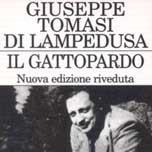
The Leopard

A classic novel set in the final days of the Italian monarchy, it follows the life of a nobleman as he navigates the shifting political landscape and the decline of his family's power. The story is rich in historical detail and psychological insight, offering a poignant reflection on the end of an era. more

Author

Giuseppe Tomasi di Lampedusa

Giuseppe Tomasi di Lampedusa was an Italian writer, best known for his novel 'The Leopard'. His works often revolve around the lives of the aristocracy, offering profound insights into social change and human nature. more

You May Also Like

“We had never before been to Italy in May, and it is truly the most wonderful month. The Lucchese countryside is a riot of colour and scent. Every road, even the busy autostrada, is lined with brilliant red poppies, making the most mundane street look picturesque. The olive trees dotting the hills are covered with silvery green and the pale cream of new buds, while the grass is tall and soft, every patch threaded with wildflowers.”

“They spent the day with Lucia, who promised that the following day she would take them up to Scala, an even tinier, loftier town where her parents now lived. That evening, Mac took her to a restaurant called Il Flauto di Pan- Pan's Flute- perched at the Villa Cimbrone among the gardens and crumbling walls. It was probably the most beautiful restaurant she'd ever seen. The centuries-old villa was embellished with incredible gardens of fuchsia bougainvillea, lemon and cypress trees and flowering herbs that scented the air. Their veranda table had an impossibly gorgeous view of the sea.”

“What can you possibly say about Rome? That it's eternal? That all roads lead to it? That it wasn't built in a day? That when there you should do as the locals do? Please. For millennia, Rome has embodied and repelled every cliché, description, and act of comprehension or explanation applied to it. As a city, it has been built and destroyed and rebuilt by - and has celebrated and signified and outlasted - caesars and barbarians and popes and Fascists and prophets and artists and pilgrims and schemers and migrants and lovers and fools.”

“I must have been about four years old when Russia took hold of me with giant hands. That grip has never lessened. For me, the love of my heart, the fulfilment of the senses and the kingdom of the mind all met here. This book is the story of my obsession. In her essays, The Sentimental Traveller, Vernon Lee wrote of her emotion for Italy thus: ‘There are moments in all our lives, most often, alas! during childhood, when we possess the mystic gift of consecration, of steeping things in our soul’s essence, and making them thereby different from all others, for ever sovereign and sacred to us.’ So Italy became to her – so Russia to me.”