Quotessence
Home / Quotes / Quote by Aleksandr Solzhenitsyn

Quote by Aleksandr Solzhenitsyn

“Two Leningrad women were summoned to the police station. Had they been at a party with some men? Yes. Had sexual intercourse taken place? (This had already been established with the aid of a reliable informer.) Er—yes. Right, then, which is it: did you take part in the sexual act voluntarily or against your will? If voluntarily, we shall have to regard you as prostitutes, you will hand over your passports and get out of Leningrad in forty-eight hours. If it was against your will, you must bring a charge of rape! The women were not a bit anxious to leave Leningrad! So the men got twelve years each.”

Quote by Aleksandr Solzhenitsyn

Work

Author

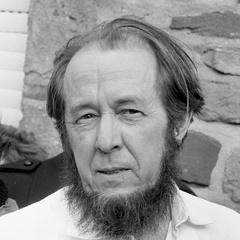
Aleksandr Solzhenitsyn

Aleksandr Solzhenitsyn, a Russian novelist, was born on December 11, 1918, and died on August 3, 2008. He is renowned for his works that profoundly exposed the dark side of the Soviet political system and is considered one of the greatest writers of the 20th century. more

You May Also Like

“If the first thing you see each and every morning is the eyes of your cellmate who has gone insane, how then shall you save yourself during the coming day? Nikolai Aleksandrovich Kozyrev, whose brilliant career in astronomy was interrupted by his arrest, saved himself only by thinking of the eternal and infinite: of the order of the Universe - and of its Supreme Spirit; of the stars; of their internal state; and what Time and the passing of Time really are. And in this way he began to discover a new field in physics. And only in this way did he succeed in surviving in the Dmitrovsk Prison. But his line of mental exploration was blocked by forgotten figures. He could not build any further - he had to have a lot of figures. Now just where could he get them in his solitary-confinement cell with its overnight kerosene lamp, a cell into which not even a little bird could enter? And the scientist prayed: "Please, God! I have done everything I could. Please help me! Please help me continue!" At this time he was entitled to receive one book every ten days (by then he was alone in the cell). In the meager prison library were several different editions of Demyan Bedny's Red Concert , which kept coming around to each cell again and again. Half an hour passed after his prayer; they came to exchange his book; and as usual, without asking anything at all, they pushed a book at him. It was entitled A Course in Astrophysics! Where had it come from? He simply could not imagine such a book in the prison library. Aware of the brief duration of this coincidence, Kozyrev threw himself on it and began to memorize everything he needed immediately, and everything he might need later on. In all, just two days had passed, and he had eight days left in which to keep his book, when there was an unscheduled inspection by the chief of the prison. His eagle eye noticed immediately. "But you are an astronomer?" Yes." "Take this book away from him!" But its mystical arrival had opened the way for his further work, which he then continued in the camp in Norilsk.”

“So I ask, who you are meant to be versus who you’ve allowed yourself to become? You are built for more. You have underutilized your capabilities and accepted less of yourself throughout your journey thus far.”

“Krushchev himself is 'revealed' not as an honest communist but instead as a political leader seeking personal advantage while hiding behind an official persona of idealism and probity, a type familiar in capitalist countries. Taking into account his murder of Beria and the men executed as 'Beria's gang' in 1953, he seems worse still - a political thug. Krushchev was guilty IN REALITY of the kinds of crimes he DELIBERATELY AND FALSELY accused Stalin of in the 'Secret Speech'.”

“Events specially staged to demonstrate the reality of that which doesn’t exist stand out in the particular detail in which they are described. No one really knows, for example, whether the harvests reported in Stalin’s or Brezhnev’s Russia were ever actually reaped, but the fact that the number of tilled hectares or tons of milled grain was always reported down to the tenth of a percent gave these simulacra the character of hyperreality. [...] In this sense, the ideology was accurate—it was describing itself. And any reality that differed from the ideology simply ceased to exist—it was replaced by hyperreality, which trumpeted its existence by newspaper and loudspeaker and was much more tangible and reliable than anything else. In the Soviet land, “fairy tale became fact,” as in that American paragon of hyperreality, Disneyland, where reality itself is designed as a “land of imagination.”

“Many of the foreign immigrants will probably belong to races originally conquered by and absorbed into the empire. While the empire is enjoying its High Noon of prosperity, all these people are proud and glad to be imperial citizens. But when decline sets in, it is extraordinary how the memory of ancient wars, perhaps centuries before, is suddenly revived, and local or provincial movements appear demanding secession or independence. Some day this phenomenon will doubtless appear in the now apparently monolithic and authoritarian Soviet empire. It is amazing for how long such provincial sentiments can survive.”

“ক্লিওপেট্রা ( আমি বাতাস ও আগুন - শেকসপিয়ার ) অ্যান্টনির মরা ঠোঁটে আগেই ও খেয়েছিল চুমো সিজারের পায়ে পড়ে হাঁটু গেঁযে নিয়েছিল কেঁদে চাকরেরা বিশ্বাসঘাতক । মিইয়ে আসা গাঢ় অন্ধকারে ওকে হেরে যেতে দেখে রোমের ইগলপাখি উল্লাসে বাজাচ্ছে ভেঁপুভেরি । ওর কমনীয় রূপে বাঁধা শেষতম লোকটি ঘরে ঢোকে ঋজু ও রাজকীয় । নিজেরি রানির সামনে তোতলায় : “দাসি-গোলামের মতো হাঁটাবে তোমাকে রাজপথে, কেননা বিজয়ী !” শুনেও ও শুয়ে থাকে, হাঁসের মতন গ্রীবা, শান্ত গরিমায় ! ভোর হলে শেকলে বাঁধবে ওর ছেলেমেয়েদের । সামান্য প্রেম পৃথিবীতে রয়ে গেছে ওর : এও লোকটির সাথে রসিকতা । তারপর ছেড়ে দেবে শেষ করুণার মতো বিষধর শ্যামল বুকের মাঝে আলতো হাতে কালো জীবটাকে ।”

“What thus emerged from the Russian Revolution was a new model of state capitalism which, in turn, would become attractive to the bourgeoisie of “backward” countries and colonies of the Western colonial powers (like Cuba, Vietnam, Mozambique, Angola, etc.). They could use the State to keep Western multinationals from bleeding the country dry, and try to “develop” independently through state mobilisation of the population. Devoid of real proletarian initiative, this was a flawed model, and even the Communist Party of the Chinese People’s Republic abandoned Stalinism after the death of Mao by setting up Special Economic Zones to attract international capital and build a new Chinese capitalist class (so-called “socialism with Chinese characteristics”). What they have in fact returned to is the type of state capitalism that Lenin advocated in 1918, opposed by the Left Communists of that time. Across the world many workers in the former Eastern European bloc still think it was better than what they have now. But neither “state capitalism” nor “state socialism” are socialism as understood by Marx. Both depend on the exploitation of workers whose surplus value is the basis for capitalist profit and who have no actual political say in the system.”