Quotessence
Home / Quotes / Quote by W. Somerset Maugham

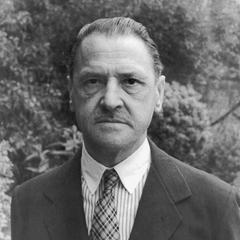
Quote by W. Somerset Maugham

“Nothing is more tedious than to talk with persons who treat your most obvious remarks as startling paradoxes and Edward suffered likewise from that passion for argument which is the bad talkers’ substitution for conversation. People who cannot talk are always proud of their dialectic. They want to modify your tritest observations and even if you suggest the day is fine, insist on arguing it out.”

Quote by W. Somerset Maugham

Work

Mrs Craddock

Browse quotes and source details for this work. more

Author

W. Somerset Maugham
W. Somerset Maugham

W. Somerset Maugham was a British playwright known for his sharp wit and insightful portrayal of human nature. Born on January 25, 1874, and passing away on December 16, 1965, Maugham's plays often delved into the complexities of human relationships and the social dynamics of his era. more

You May Also Like

“...Plato conceived of philosophy as necessarily gregarious rather than solitary. The exposure of presumptions is best done in company, the more argumentative the better. This is why discussion around the table is so essential. This is why philosophy must be argumentative. It proceeds by way of arguments, and the arguments are argued over. Everything is aired in the bracing dialectic wind stirred by many clashing viewpoints. Only in this way can intuitions that have their source in societal or personal idiosyncrasies be exposed and questioned. ... There can be nothing like "Well, that's what I was brought up to believe," or "I just feel that it's right," or "I am privy to an authoritative voice whispering in my ear," or "I'm demonstrably smarter than all of you, so just accept that I know better here." The discussion around the seminar table countenances only the sorts of arguments and considerations that can, in principle, make a claim on everyone who signs on to the project of reason: appealing to, evaluating, and being persuaded by reasons. (pp. 38-39)”

“Đặt liên tiếp nhiều ý với nhau không phải là lý luận, nếu giữa những ý đó không có sự liên lạc chặt chẽ. Muốn làm thành một dây xúc xích không phải cứ để khoen nọ kế khoen kia là đủ, mà phải móc chúng vào nhau. Các nhà "hùng biện" rất hay dùng thuật chắp càn ấy để làm mê hoặc thính giả; nghe họ ta tưởng họ có lí lắm, mà về nhà, nếu được đọc bài diễn văn của họ thì mới thấy từ đầu chí cuối chỉ là một đống gạch vụn. Họ nói huyên thuyên, bàn về vấn đề xuất cảng gạo, về chính thể dân chủ, về giáo dục, ngoại giao ... rồi kết luận rằng ... mọi người phải hi sinh cho Tổ quốc.”