Quotessence
Home / Quotes / Quote by John Muir

Quote by John Muir

Work

John of the Mountains: The Unpublished Journals of John Muir

John of the Mountains: The Unpublished Journals of John Muir is a collection of personal writings by John Muir, detailing his experiences and observations in the American wilderness. The journals offer a unique glimpse into Muir's life and his deep connection to nature, reflecting his influential role in the conservation movement. more

Author
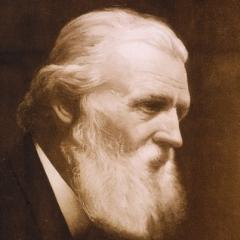
John Muir
John Muir

John Muir (April 21, 1838 - December 24, 1914) was an American naturalist, writer, explorer, and environmentalist. Known for his love of nature and advocacy for environmental protection, Muir is considered one of the pioneers of the modern environmental movement. more

You May Also Like

“As when a mountain climber on some cloud-locked peak grows so weary that he forgets the world around him in the pain, and pull, and pain, and pull, aware of nothing but his muscles, fog, and stone, but then suddenly a bright wind sweeps the clouds aside, and there open the boundless blue heavens, the sentinel heads of mountains thrusting through the fog floor, and the climber gasps as he sees, sovereign up above, the terrible, all-giving Sun, so Carlyle gasped at the sight of Bridger. And so he should. So should we all.”

“All Wintrops are mad, wicked, vain, they lack discipline, they live in confusion, they are constantly getting divorced. They treat their wives like cattle and yet these women remain in love with them, they are on the wrong side in the war or they make money out of it, they are crafty in business, but they gamble their money away or throw it in the air, and they’ll sell one another for a few pence. Did you ever know your father?”

“...the hippies of the 1960s did understand something. They were right in fighting the plastic culture, and the church should have been fighting it too... More than this, they were right in the fact that the plastic culture - modern man, the mechanistic worldview in university textbooks and in practice, the total threat of the machine, the establishment technology, the bourgeois upper middle class - is poor in its sensitivity to nature... As a utopian group, the counterculture understands something very real, both as to the culture as a culture, but also as to the poverty of modern man's concept of nature and the way the machine is eating up nature on every side.”