Quotessence
Home / Quotes / Quote by Suzette Haden Elgin

Quote by Suzette Haden Elgin

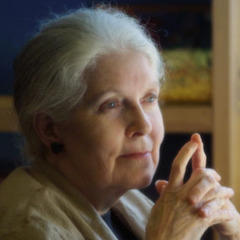
“Suppose we begin to use it, as you say we should. And then, as more and more little girls acquire Láadan and being to speak a language that expresses the perceptions of women rather than those of men, reality will begin to change. Isn't that true?”

Quote by Suzette Haden Elgin

Work

Native Tongue

This book is a speculative fiction narrative that delves into the impact of language on individual and collective identity, set in a world where language shapes not only communication but also the very essence of a person's being. more

Author

Suzette Haden Elgin
Suzette Haden Elgin

Suzette Haden Elgin (November 18, 1936 – January 27, 2015) was an American linguist, science fiction author, and feminist activist. She is best known for creating the constructed language Láadan, designed to express women's perspectives and experiences. Her works include the Native Tongue trilogy and numerous linguistic studies. She explored themes of gender, power, and social structures through language and literature, leaving a lasting impact on feminist science fiction and linguistics. more

You May Also Like

“First, she must unequivocally say “no” to the housewife image. This does not mean, of course, that she must divorce her husband, abandon her children, give up her home. She does not have to choose between marriage and career; that was the mistaken choice of the feminine mystique. In actual fact, it is not as difficult as the feminine mystique implies, to combine marriage and motherhood and even the kind of lifelong personal purpose that once was called “career.” It merely takes a new life plan—in terms of one’s whole life as a woman. The first step in that plan is to see housework for what it is—not a career, but something that must be done as quickly and efficiently as possible. Once a woman stops trying to make cooking, cleaning, washing, ironing, “something more,” she can say “no, I don’t want a stove with rounded corners, I don’t want four different kinds of soap.” She can say “no” to those mass daydreams of the women’s magazines and television, “no” to the depth researchers and manipulators who are trying to run her life. Then, she can use the vacuum cleaner and the dishwasher and all the automatic appliances, and even the instant mashed potatoes for what they are truly worth—to save time that can be used in more creative ways.”

“Feminist consciousness-raising has not significantly pushed women in the direction of revolutionary politics. For the most part, it has not helped women understand capitalism–how it works as a system that exploits female labor and its interconnections with sexist oppression. It has not urged women to learn about different political systems like socialism or encouraged women to invent and envision new political systems. It has not attacked materialism and our society’s addiction to overconsumption. It has not shown women how we benefit from the exploitation and oppression of women and men globally or shown us ways to oppose imperialism. Most importantly, it has not continually confronted women with the understanding that feminist movement to end sexist oppression can be successful only if we are committed to revolution, to the establishment of a new social order.”

“The central question is not: what is force and what is freedom? That is a good question, but in the realm of human cruelty - the realm of history - it is utterly abstract. The central question is: why is force never acknowledged as such when used against the racially or sexually despised? Nazi terror used against the Jews is not in dispute. Still, there is an almost universal - and intrinsically anti-Semitic - conviction that the Jews went voluntarily to the ovens. Rational discourse on how the Jews were terrorized does not displace or transform this irrational conviction. And similarly, no matter what force is used against women as a class or as individuals, the universal conviction is that women want (either seek out or assent to) whatever happens to them, however awful, dangerous, destructive, painful, or humiliating. A statement is made about the nature of the Jew, the nature of the woman. The nature of each and both is to be a victim. A metaphysical victim is never forced, only actualized.”

“Direct action meant that the goal of any and all of these activities was to provide ways for people to get in touch with their own powers and capacities, to take back the power of naming themselves and their lives. It was to be distinguished from more conventional political activity even in a democratic system. Instead of attempting to make change by forming interest groups to pressure politicians, anarchists insisted that we learn to think and act for ourselves by joining together in organizations in which our experience, our perception, and our activity can guide and make the change. Knowledge does not precede experience, it flows from it: "We begin by deciding to work, and through working, we learn ... We will learn how to live in libertarian communism by living in it." People learn how to be free only by exercising freedom: "We are not going to find ourselves ... with people ready-made for the future ... Without the continued exercise of their faculties, there will be no free people ... The external revolution and the internal revolution presuppose one another, and they must be simultaneous in order to be successful.”

“I told him I had, perhaps, different notions of matrimony from what the received custom had given us of it; that I thought a woman was a free agent as well as a man, and was born free, and, could she manage herself suitably, might enjoy that liberty to as much purpose as the men do; that the laws of matrimony were indeed otherwise, and mankind at this time acted quite upon other principles, and those such that a woman gave herself entirely away from herself, in marriage, and capitulated, only to be, at best, but an upper servant, and from the time she took the man she was no better or worse than the servant among the Israelites, who had his ears bored—that is, nailed to the door-post—who by that act gave himself up to be a servant during life; that the very nature of the marriage contract was, in short, nothing but giving up liberty, estate, authority, and everything to the man, and the woman was indeed a mere woman ever after—that is to say, a slave. Roxana: The Fortunate Mistress (1724)”

“The lingerie department is the only one that she can reach in her wheelchair. Nevertheless, she is fired the next day because of complaints that a woman who is so obviously not sexually attractive selling alluring nightgowns makes customers uncomfortable. Daunted by her dismissal, she seeks consolation in the arms of the young manager and soon finds herself pregnant. Upon learning of this news, he leaves her for a nondisabled woman with a fuller bustline and better homemaking skills in his inaccessible kitchen.”