Quotessence
Home / Quotes / Quote by Aldous Huxley

Quote by Aldous Huxley

“By those who get a kick out of this sort of thing (and they are very numerous) inhumanity is enjoyed for its own sake, but often, nonetheless, with a bad conscience. To allay their sense of guilt, the bullies and the sadists provide themselves with a creditable excuses for their favorite sport. Thus, brutality toward children is rationalized as discipline, as obedience to the Word of God - "he that spareth the rod, hateth his son". Brutality toward criminals is a corollary of the Categorical Imperative. Brutality toward religious or political heretics is a blow for the True Faith. Brutality toward members of an alien race is justified by arguments drawn from what may once have passed for Science. Once universal, brutality toward the insane is not yet extinct - the mad are horribly exasperating. But this brutality is no longer rationalized, as it was in the past, in theological terms. The people who tormented Surin and the other victims of hysteria or psychosis did so, first, because they enjoyed being brutal and, second, because they were convinced that they did well to be brutal. And they believed that they did well, because, ex hypthesi, the mad had always brought their own troubles upon themselves. For some manifest or obscure sin, they were being punished by God, who permitted devils to besiege or obsess them. Both as God's enemies and as temporary incarnations of radical evil, they deserved the be maltreated. And maltreated they were - with a a good conscience and a heart-warming sense that the divine will was being done on earth, as in heaven.”

Quote by Aldous Huxley

Work

The Devils of Loudun

This book delves into the events surrounding the witchcraft allegations and subsequent trials in the French town of Loudun during the 17th century. It examines the social and religious context of the time, the individuals involved, and the impact of the events on the community. more

Author
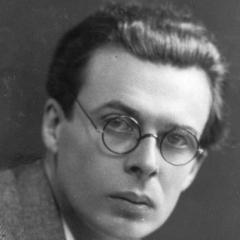
Aldous Huxley
Aldous Huxley

Aldous Huxley was an English writer and philosopher, renowned for his dystopian novel 'Brave New World'. Born on July 26, 1894, in Godalming, Surrey, England, he was the younger brother of the poet and critic Leonard Huxley. Huxley's works frequently delved into the interplay of science, politics, and philosophy, and he was a prominent figure in the literary movement known as the 'Lost Generation'. He passed away on November 22, 1963. more

You May Also Like

“I would like to share an insight from Luther. In a sermon on Pentecost he affirmed that we are born with an old heart, a heart full of carnal desires and concupiscence. People desire prestige, power, money, their neighbour's goods, their neighbour's wife and so on, but God blocks their path with His commandments: "You must not...; you must not...!" In this situation, said Luther, it is inevitable that they would begin to look at God with a sullen eye, as an enemy of their own happiness, as the one who is the obstacle to obtaining their desires. There is a silent bitterness in sinful people against God, to the extent that, if it depended on them, they would rather that God did not even exist. When the Holy Spirit comes, here is the miracle! He presents people with a different face for God: a God who is an ally, not an adversary; a good Father who did not spare even His own Son for them; in short, a God who shows them favour. They understand that God has given them the commandments for their good. A new feeling springs up in their hearts, that of sons or daughters, and from their lips at last comes the cry, "Abba, Father!”

“Can you imagine how boring life would be without the seven little spices? you talk about sloth, but why would men and women get out of bed if there were no lust? Why would people want to be in a band if they couldn't feel the rush that rage bring to the musical table? Why would anyone want to be a bleeding heart without even a hint of greed in their dirty little soul? Why would the world go round if there weren't a few rules to break? A few revolutions to make? Let's put it this way: Why would you want to take a deep breath if you were expected to hold the damn thing?”

“I never worked so hard in my life, Rory. I had no choice: the alternative was unspeakable. Christians talk about the horror of sin, but they have overlooked something. They keep talking as if everyone were a sinner, when the truth is that nowadays one is hardly up to it. There is very little sin in the depths of the malaise. The highest moment of a malaisian's life can be that moment when he manages to sin like a proper human (Look at us, Binx -- my vagabond friends as good as cried out to me -- we're sinning! We're succeeding! We're human after all!).”

“Continually, and in a thousand other ways, did she feel the innumerable throbs of anguish that had been so cunningly contrived for her by the undying, the ever-active sentence of the Puritan tribunal. Clergymen paused in the street to address words of exhortation, that brought a crowd, with its mingled grin and frown, around the poor, sinful woman. If she entered a church, trusting to share the Sabbath smile of the Universal Father, it was often her mishap to find herself the text of the discourse.”

“You were born together, and together you shall be forevermore. You shall be together when the white wings of death scatter your days. Ay, you shall be together even in the silent memory of God. But let there be spaces in your togetherness, And let the winds of the heavens dance between you. Love one another, but make not a bond of love: Let it rather be a moving sea between the shores of your souls. Fill each other's cup but drink not from one cup. Give one another of your bread but eat not from the same loaf Sing and dance together and be joyous, but let each one of you be alone, Even as the strings of a lute are alone though they quiver with the same music. Give your hearts, but not into each other's keeping. For only the hand of Life can contain your hearts. And stand together yet not too near together: For the pillars of the temple stand apart, And the oak tree and the cypress grow not in each other's shadow.”