“The danger we have is that we want to water down what Jesus said to make it mean something that aligns with our common sense.”
Quote by Oswald Chambers
Work
My Utmost for His Highest
This book provides a collection of daily readings that focus on Christian principles and spiritual growth. It includes reflections and teachings drawn from the author's personal experiences and interpretations of biblical texts. more
Author
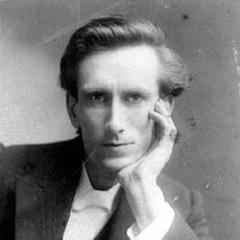
Oswald Chambers
Oswald Chambers (July 24, 1874 – November 15, 1917) was a Scottish Christian minister, teacher, and writer, best known for his devotional classic 'My Utmost for His Highest'. Born in Aberdeen, he studied art in London before feeling called to ministry. He taught at the Bible Training College in London and served as a YMCA chaplain to British soldiers in Egypt during World War I, where he died of complications from appendicitis. His works, compiled posthumously by his wife Gertrude, have inspired millions worldwide. more
You May Also Like
Source: Edward Fitzgerald's The Rubaiyat of Omar Khayyam
Source: Salt to the Sea
“A sixth sense cannot make up for a total lack of common sense.”
Source: Fruits Basket, Vol. 3
“Common sense is one of the most unused commodities available to man.”
“Probability theory is nothing more than common sense reduced to calculation. -1819”
“One's own form of sensibility is not not necessarily another's. Common sense is not so common.”
Source: Blight in the Ocean
Source: A Court of Thorns and Roses
Source: The Utopia of Rules: On Technology, Stupidity, and the Secret Joys of Bureaucracy