Quotessence
Home / Quotes / Quote by Paul Brunton

Quote by Paul Brunton

Work

Advanced contemplation: The peace within you

This book explores various contemplative techniques aimed at fostering peace and tranquility within the reader's mind and spirit. more

Author
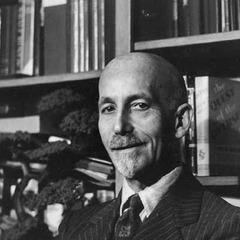
Paul Brunton
Paul Brunton

Paul Brunton was a British journalist and writer known for his interest in Eastern philosophy and mysticism. His works, such as 'A Search in Secret India' and 'The Quest of the Overself', had a profound impact on the Western world in the mid-20th century. more

You May Also Like

“Experience shows that if a sufficiently deep level--not necessarily the deepest level but one that corresponds to what the yogis call savikalpa samadhi, which is not as deep as nirvikalpa--if that can be attained and then prolonged sufficiently in time, an artist or a writer can draw from the experience creative power for his work.”

“Everything is taken away from him; he is nothing and has nothing; yet he still feels one thing which utterly compensates for this loss. He feels the presence of the Overself [...] In the practice of Indian Yoga, Nirvikalpa Samadhi is considered to be the farthest point to which the practitioner can travel. Nirvikalpa Samadhi is the condition of the emptied mind, without any trace of thought, whether of the world or of the person himself; yet fully aware [...] So many conversations on the words of Jesus have taken his sentence "I and my Father are one" to mean a kind of union like marriage. But they overlook the fact that married couples still remain couples, still express the number two. Jesus did not say, "I and my father are two." The number one is definitely not two. For Jesus found, as every other man who attains that stage of consciousness finds, that when contemplating the Infinite Life-Power (which he named the Father) he himself vanished. There was then no other consciousness except that of the Infinite itself. For That was the substratum of his own "I." But what happened in his contemplation two thousand years ago still happens today; the same discovery is made when the illusion of egoity vanishes.”

“The Surangama Sutra chooses, as the best meditation method for the present historic cycle, the one used by Avalokitesvara. It disengages bodily hearing from outward sound, then penetrates still deeper into the void beyond this duality, then beyond ego and its object, until all opposites and dualities vanish, leaving absoluteness. Nirvana follows as a natural consequence. In other words, disengage consciousness from the senses and return to pure Consciousness itself.”

“Life remains what it is--deathless and unbound. We shall all meet again. Know what you are, and be free. The best counsel today is, keep calm, aware. Don't let the pressure of mental environment break into what you know and what is real and ultimately true. This is your magic talisman to safeguard you; cling to it. The last word is--Patience! The night is darkest before dawn. But dawn comes.”

“What about ‘Just-ification,’ but with a hyphen? Just-hyphen-ification?” Michael asked. “What inspired you to come up with this idea?” I inquired. “Well, if you hyphenate the word justification, it separates the term just from ication. The term just means to be fair and equitable, and since you told us that you wanted to advocate for tolerance between Reformists and Capacianists, I found that justness would be especially relevant to our new movement. Plus, writing that name on paper may intrigue more people, so the movement could become more widespread and well-known. And if you consider the word just and the word justification and put the ideas behind the words together, you would pretty much be saying that you would be using what is just as a justification to the new movement.”