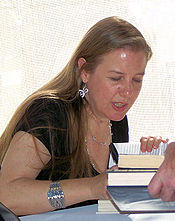
“My mother once wrote a poem about rivers. They were women, she wrote. Starting out small girls, tiny streams decorated with wildflowers. They were torrents, gouging paths through sheer granite, flinging themselves off cliffs, fearless and irresistible. Later, they grew fat servicable, broad slow curves carrying commerce and sewage, but in their unconscious depths catfish gorged, grew the size of barges, and in the hundred-year storms, they rose up, forgetting the promises they made, the wedding vows, and drowned everything for miles around. Finally they gave out, birth-emptied, malarial, into a fan of swamps that met the ocean.”
Quote by Janet Fitch
White OleanderWhite Oleander is a work of fiction that follows the life of Astrid Magnussen, a girl whose mother, Ingrid, is a brilliant but narcissistic poet. After Ingrid is sentenced to prison for murder, Astrid is placed into a series of foster homes across Southern California. Each home presents a different set of challenges and influences, shaping Astrid's identity as she grows from a child into a young woman. The narrative explores themes of resilience, the search for belonging, and the powerful, often destructive, bond between mother and daughter. The title refers to a poisonous flowering shrub, serving as a metaphor for Ingrid's beautiful yet dangerous influence on her daughter's life. more