Quotessence
Home / Quotes / Quote by Barbara Brown Taylor

Quote by Barbara Brown Taylor

Work

An Altar in the World: A Geography of Faith

An Altar in the World: A Geography of Faith is a work that delves into the profound connection between spirituality and the natural world. The author investigates how various landscapes and environments have historically influenced religious practices and beliefs. The book offers a rich tapestry of narratives and reflections on the significance of place in the spiritual journey. more

Author
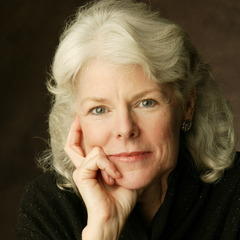
Barbara Brown Taylor

Barbara Brown Taylor, born on September 21, 1951, is an American priest with a profound understanding of theology. She has served as a pastor in several churches and is known for her unique preaching style and insightful views on religious life. more

You May Also Like

“The scientist in me worries that my happiness is nothing more than a symptom of bipolar disease, hypergraphia from a postpartum disorder. The rest of me thinks that artificially splitting off the scientist in me from the writer in me is actually a kind of cultural bipolar disorder, one that too many of us have. The scientist asks how I can call my writing vocation and not addiction. I no longer see why I should have to make that distinction. I am addicted to breathing in the same way. I write because when I don’t, it is suffocating. I write because something much larger than myself comes into me that suffuses the page, the world, with meaning. Although I constantly fear that what I am writing teeters at the edge of being false, this force that drives me cannot be anything but real, or nothing will ever be real for me again.”

“People in the West need to know that most of the spiritual, intellectual, and cultural products of South Asia are tainted by Brahmanism. What may have offered you liberation and healing also causes caste-oppressed people to suffer. You don't have to give up those practices or concepts, but the call is to be intentional and acknowledge the caste harm. Your faith is bound to the violence it sanctions. For practitioners of Brahminical traditions, this reckoning may be painful. It's hard to admit the gulf between your values and the history of your spiritual practice, but if you do not wish to be complicit in the suffering of others, then you must confront these truths. When we exalt some aspects of spiritual practices, we cannot be fully aware and present. People enter spiritual practices and surrender everything without critical judgment and informed consent. Any faith is a practice of teachings that come from an ego, and those can then be interpreted by bad actors. To my mind, part of being a seeker is to interrogate all teachings and practices, to stay soft and flexible as opposed to rigid and dogmatic, to move slowly enough to be able to see when we're being blinded to the truth.”

“For the community's quieter members, the call to humble listening is, seemingly paradoxically, a call to speak up. If others build an auditorium for you, you do them a disservice if you fail to sing. As we noted above, humble listening must declare itself: you are simply not listening well if you don't talk back. When your peers speak, they need to hear from you. At the very least, they need to know that they have been properly understood, and they often need to receive your comments and criticisms so that they can improve their ideas and arguments. The same is true when you speak up. In his "Prayer Before Study," Aquinas reminds us that we have been born into the "twofold darkness" of "sin and ignorance." As limited creatures who are prone to error, we all need to hear from others.”

“One of the first serious spiritual practices I learned in my early twenties was to watch what I was talking about. It is unfortunate but not surprising that most people have no idea what they are saying, to whom, and the consequences of that on themselves and others. If we want to be happy; don’t gossip, don’t spread hate, don’t talk about other people, don’t spread fear, don’t complain, don’t relay stories which are detrimental to the well-being of those around us. That will cut out the vast majority of most people’s conversations. There is a time for honest, well-intentioned directness but it is not found in common conversation and it is a learned skill. Be a bringer of peace and healing. It’s a discipline, for sure, but one that will transform our lives.”

“Guides will give various practices, but rarely do Murids perform them and even more rarely with any kind of consistency. Many people run around from Sheikh to Sheikh or therapist to therapist, trying to get answers. Often the problem is that these people never truly put into effect the answers they have already been given. Rather than always looking for more, more, more, they should use what they have already been given.”

“I doubt very much that there is any creativity in the world apart from contemplation. In contemplation we catch a vision of not only what is, but what can be. We find our place in salvation history. Contrary to what we have thought, contemplatives are the great doers. Contemplatives return from times of withdrawal with inner clarity and with direction. In their return from the silence, they take up the work of giving from to the liberating truths that have been given to them in flashes of insight and vision. They are also the great enablers of others. They evoke spirit in those they meet. Because they have been present to themselves, they are able to be present to others in a way that awakens, enlivens, gives courage. In them we see more clearly a way of existence that combines both being and doing.”