Quotessence
Home / Quotes / Quote by Albert Camus

Quote by Albert Camus

“Meslek ya da eğilim gereği insan üzerinde çok düşündüğümüz zaman primat maymunlara özlem duyduğumuz olur.”
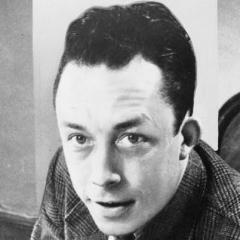
Quote by Albert Camus

Work

The fall

A narrative that delves into the complexities of personal and societal decline, examining the journey from stability to chaos and the search for redemption. more

Author

Albert Camus
Albert Camus

Albert Camus was a French author and philosopher, born on November 7, 1913, and died on January 4, 1960. Known for his unique existentialist philosophy and profound insights into human suffering, Camus' works include 'The Stranger', 'The Plague', and 'The Myth of Sisyphus', which have had a profound impact on 20th-century literature. more

You May Also Like

“There are several important remarks which can be made about this 'absolute emptiness' and 'absolute nothingness'. First of all, we now know, theoretically and empirically, that such a thing does not exist. There may be more or less of something, but never an unlimited 'perfect vacuum'. In the second place, our nervous make-up, being in accord with experience, is such that 'absolute emptiness' requires 'outside walls'. The question at once arises, is the world 'finite' or 'infinite'? If we say 'finite', it has to have outside walls, and then the question arises: What is 'behind the walls'? If we say it is 'infinite', the problem of the psychological 'walls' is not eliminated. and we still have the semantic need for walls, and then ask what is beyond the walls. So we see the such a world suspended in some sort of an 'absolute void' represents a nature against human nature, and so we had to invent something supernatural to account for such assumed nature against human nature. In the third place, and this remark is the most fundamental of all, because a symbol must stand for something to be a symbol at all, 'absolute nothingness' cannot be objective and cannot be symbolized at all. This ends the argument, as all we may say about it is neither true nor false, but non-sense. We can make noises, but say nothing about the external world. It is easy to see that 'absolute nothingness' is a label for a semantic disturbance, for verbal objectification, for a pathological state inside our skin, for a fancy, but not a symbol, for a something which has objective existence outside our skin.”

“Three things have a limited threshold: Time, pain, and death. While truth, love, and knowledge – Are boundless.”