Quotessence
Home / Quotes / Quote by Boethius

Quote by Boethius

“He is in no real danger. He merely suffers from a lethargy, a sickness that is common among the depressed. He has forgotten who he really is, but he will recover, for he used to know me, and all I have to do is cloud the mist that beclouds his vision.”

Quote by Boethius

Work

The Consolation of Philosophy

Written in the second century AD, this work is a series of letters between Marcus Aurelius and his idealized mentor, the ancient Greek philosopher Plato. It delves into the nature of virtue, the purpose of life, and the role of reason in the face of adversity, reflecting the Stoic philosophy that Marcus Aurelius practiced as a Roman Emperor. more

Author
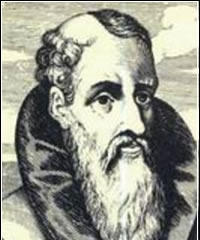
Boethius
Boethius

Boethius, born in 480 AD and died in 524 AD, was a prominent philosopher, logician, mathematician, and rhetorician of the Byzantine Empire. His work, 'The Consolation of Philosophy,' had a profound impact on later generations, particularly during the Middle Ages. more

You May Also Like

“I am gifted at blending myself into any given milieu—you've never seen such a typical California teenager as I was, nor such a dissolute and callous pre-med student—but somehow despite my efforts, I am never able to blend myself in entirely and remain in some respects quite distinct from my surroundings, in the same way that a green chameleon remains a distinct entity from the leaf upon which it sits, no matter how perfectly it has approximated the the subtleties of the particular shade.”

“There was a graduate student in my cohort, this guy I dated, who told me he came to realize that doing physics is like this: there's a concrete wall twenty feet thick, and you're on one side, and on the other side is everything worth knowing. And all you have is a spoon. So you just have to take a spoon and start scraping at the wall: no other way. He works in a bookstore now. But I think of it this way. There is a jigsaw puzzle. It's infinitely large, with no edges or corners to help you out. We have to put it together: it's our duty. We will never finish, but we have to find our satisfactions where we can: when we place two pieces together that suggest we may have found the place where the sky touches the sea, or when we discover a piece that is beautiful in and of itself, that has an unusual color or a glimpse of an unexpected pattern. And the pieces that do not join together also tell you something. If there are very few eureka moments, then at least there are a thousand little failures, that point the way toward a hundred little joys.”