Quotessence
Home / Authors / Boethius
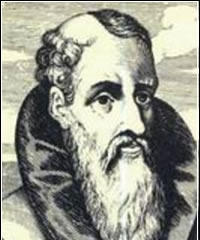
Boethius

Boethius Quotes

Philosopher

Filter quotes by topic

Famous Boethius Quotes

“And further, God should not be regarded as older than His creations by any period of time, but rather by the peculiar property of His own single nature. For the infinite changing of temporal things tries to imitate the ever simultaneously present immutability of His life: it cannot succeed in imitating or equalling this, but sinks from immutability into change, and falls from the single directness of the present into an infinite space of future and past. And since this temporal state cannot possess its life completely and simultaneously, but it does, in the same manner, exist forever without ceasing, it therefore seems to try in some degree to rival that which it cannot fulfill or represent, for it binds itself to some sort of present time out of this small and fleeting moment; but inasmuch as this temporal present bears a certain appearance of that abiding present, it somehow makes those, to whom it comes, seem to be in truth what they imitate. But since this imitation could not be abiding, the unending march of time has swept it away, and thus we find that it has bound together, as it passes, a chain of life, which it could not by abiding embrace in its fullness. And thus if we would apply proper epithets to those subjects, we can say, following Plato, that God is eternal, but the universe is continual.”

“... there is no place whatever for hatred in the minds of the wise. Only an utter idiot would hate good men, and it is irrational to hate the wicked; for if vice is a species of mental disease comparable to illness in the body, since we regard those who are physically ill as wholly undeserving of hatred and deserving rather of pity, then men with minds oppressed by wickedness, a condition more dreadful than any sickness, should all the more be pitied rather than hounded.”

“Since it is through the possession of happiness that people become happy, and since happiness is in fact divinity, it is clear that it is through the possession of divinity that they become happy. But by the same logic as men become just through the possession of justice, or wise through the possession of wisdom, so those who possess divinity necessarily become divine. Each happy individual is therefore divine. While only God is so by nature, as many as you like may become so by participation.”

“You would not search the woodside gay To pick a springtime flower When all the shuddering country groans Before the North Wind's power. Nor would you seek with greedy hand To pluck your vines in May; The wine god gives his gift of grapes When Autumn's on the way. For God has fixed the season's tasks And each receives its own: No power is free to disarray The order God has shown.”

“And so sovereign Providence has often produced a remarkable effect--evil men making other evil men good. For some, when they think they suffer injustice at the hands of the worst of men, burn with hatred for evil men, and being eager to be different from those they hate, have reformed and become virtuous. It is only the power of God to which evils may also be good, when by their proper use He elicits some good result.”

“Thou deemest Fortune to have changed towards thee; thou mistakest. Such ever were her ways, ever such her nature. Rather in her very mutability hath she preserved towards thee her true constancy. Such was she when she loaded thee with caresses, when she deluded thee with the allurements of a false happiness. Thou hast found out how changeful is the face of the blind goddess.”

“Among wise men there is no place at all left for hatred. For no one except the greatest of fools would hate good men. And there is no reason at all for hating the bad. For just as weakness is a disease of the body, so wickedness is a disease of the mind. And if this is so, since we think of people who are sick in body as deserving sympathy rather than hatred, much more so do they deserve pity rather than blame who suffer an evil more severe than any physical illness.”

“The sole cause of their tragic sufferings was their obvious and complete contempt of the pursuits of immortal men which my teaching had instilled in them. It is hardly surprising if we are driven by the blasts of storms when our chief aim on this sea of life is to displease wicked men. And though their numbers are great, we can afford to despise them because they have no one to lead them and are carried along only by ignorance which distracts them at random first one way then another. When their forces are in superior numbers, our general conducts a tactical withdrawal of his forces to a strong point, and they are left to encumber themselves with useless plunder. Safe from their furious activity or our ramparts above, we can smile at their efforts to collect all the most useless booty: our citadel cannot fall to the assaults of folly”

“I who once wrote songs with keen delight am now by sorrow driven to take up melancholy measures. Wounded Muses tell me what I must write, and elegiac verses bathe my face with real tears. Not even terror could drive from me these faithful companions of my long journey. Poetry, which was once the glory of my happy and flourishing youth, is still my comfort in this misery of my old age.”

“Balance out the good things and the bad that have happened in your life and you will have to acknowledge that you are still way ahead. You are unhappy because you have lost those things in which you took pleasure? But you can also take comfort in the likelihood that what is now making you miserable will also pass away.”

“Wretched men cringe before tyrants who have no power, the victims of their trivial hopes and fears. They do not realise that anger is hopeless, fear is pointless and desire all a delusion. He whose heart is fickle is not his own master, has thrown away his shield, deserted his post, and he forges the links of the chain that holds him.”