Quotessence
Home / Quotes / Quote by Boethius

Quote by Boethius

Work

Boethius Collection [2 Books]

The Boethius Collection features two seminal texts by Boethius, 'The Consolation of Philosophy' and 'De Institutione Musicæ.' 'The Consolation of Philosophy' is a philosophical dialogue that offers solace to Boethius during his imprisonment, discussing the nature of happiness, virtue, and the afterlife. 'De Institutione Musicæ' is a treatise on the theory and practice of music, demonstrating Boethius' expertise in both philosophy and the arts. more

Author
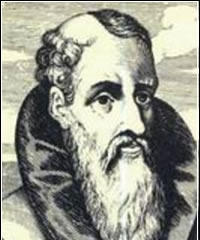
Boethius
Boethius

Boethius, born in 480 AD and died in 524 AD, was a prominent philosopher, logician, mathematician, and rhetorician of the Byzantine Empire. His work, 'The Consolation of Philosophy,' had a profound impact on later generations, particularly during the Middle Ages. more

You May Also Like

“Instant enlightenment. A quintessential modernism, culture and religion accommodated to the age of fast food and bumper stickers. But psyche and spirit are not so exempt from the natural domain that they can simply produce self-change instantaneously, on demand. Wisdom precipitates through a notoriously slow apparatus of retorts and flasks, and it has to find receptive ground only in a properly seasoned mind.”

“People who turn to philosophy expecting to harvest a crop of formulas of wisdom or understanding do not understand-philosophy has such things, but they are merely incidental, not the essence of the matter. Philosophy is about subtilizing and tuning up the coherence and acuity of one's seeing, it is about opening new dimensions for insight, learning to think about what one is doing when one thinks instead of just blundering through the processes of putting thoughts together.”

“Do you think that civilization advances because of things written in books? Not a bit of what is written in books ever got there until after the thought of it happened in someone's mind. Someone first had to collect it from space, or recollect it from its electrical pattern to which he (or she) had been attuned. The book is but a record of what has already happened.”