“Professor Smith has kindly submitted his book to me before publication. After reading it thoroughly and with intense interest I am glad to comply with his request to give him my impression. The work is a broadly conceived attempt to portray man's fear-induced animistic and mythic ideas with all their far-flung transformations and interrelations. It relates the impact of these phantasmagorias on human destiny and the causal relationships by which they have become crystallized into organized religion. This is a biologist speaking, whose scientific training has disciplined him in a grim objectivity rarely found in the pure historian. This objectivity has not, however, hindered him from emphasizing the boundless suffering which, in its end results, this mythic thought has brought upon man. Professor Smith envisages as a redeeming force, training in objective observation of all that is available for immediate perception and in the interpretation of facts without preconceived ideas. In his view, only if every individual strives for truth can humanity attain a happier future; the atavisms in each of us that stand in the way of a friendlier destiny can only thus be rendered ineffective. His historical picture closes with the end of the nineteenth century, and with good reason. By that time it seemed that the influence of these mythic, authoritatively anchored forces which can be denoted as religious, had been reduced to a tolerable level in spite of all the persisting inertia and hypocrisy. Even then, a new branch of mythic thought had already grown strong, one not religious in nature but no less perilous to mankind -- exaggerated nationalism. Half a century has shown that this new adversary is so strong that it places in question man's very survival. It is too early for the present-day historian to write about this problem, but it is to be hoped that one will survive who can undertake the task at a later date.”
Quote by Albert Einstein
Book:Man and His Gods
Work
Man and His Gods
Browse quotes and source details for this work. more
Author
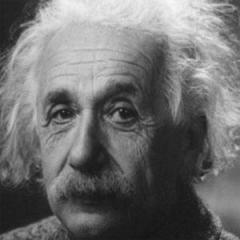
Albert Einstein
Albert Einstein, a German-born theoretical physicist, is renowned for his work on relativity and the photoelectric effect. His contributions revolutionized our understanding of the universe and had a profound impact on modern physics. more
You May Also Like
Source: The Wild Ass's Skin
Source: Lucian's True History
“Let us go beyond the boundaries of right and wrong. Let us vanish in the beauty of love.”
“Burn yourself with the fire of love to enjoy the fiery, burning beauty of love.”
“Let the beauty of love bloom like a flower, and then welcome everyone you meet with that flower.”
“The highest form of wisdom is to be simple and live in the beauty of love.”